Tree Health
Deep Root Feeding: What It Is, When It Helps, and When It Doesn't
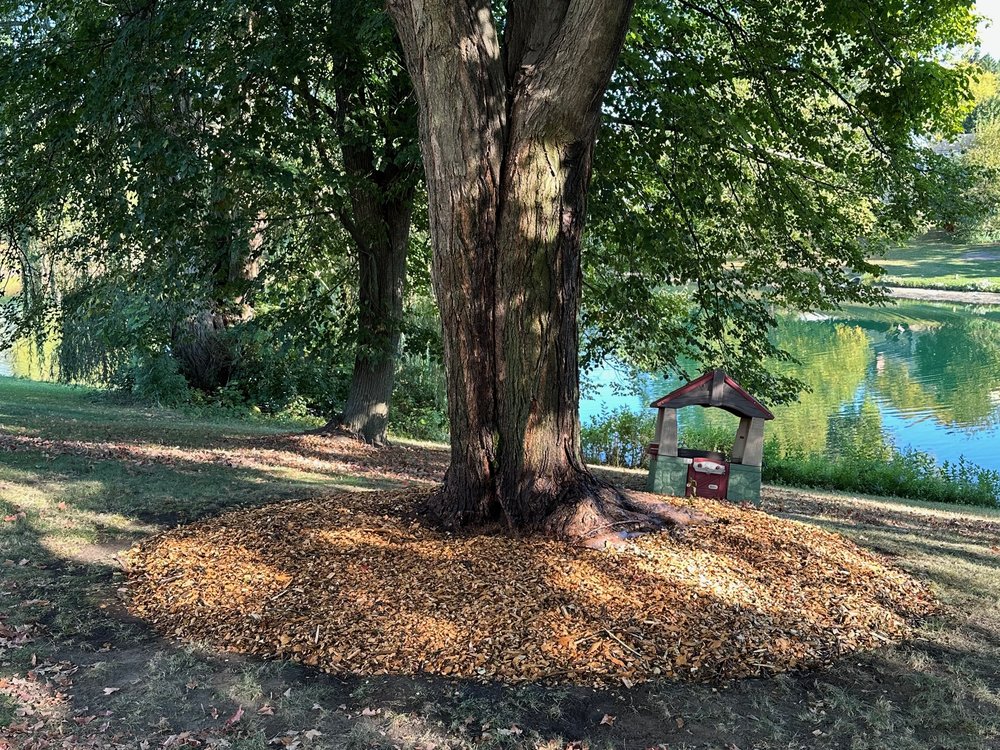
"Should we be feeding this tree?" It's one of the questions we hear most, usually from someone looking at a tree that just doesn't look the way it used to. It's a fair question, and the honest answer is: sometimes. Deep root feeding can be a real help to a tree. It can also be money spent on the wrong problem. The difference comes down to knowing what the tree actually needs before anything goes into the ground.
What deep root feeding actually is
Deep root feeding means placing nutrients below the soil surface, in the area where a tree's roots are, instead of spreading them on top of the ground. Usually that's done by injecting a liquid into the soil at points spread across the root zone.
The name is a little misleading. "Deep" sounds like the nutrients go far down to reach the tree's deepest roots. In reality, most of a tree's roots, and almost all of the fine roots that take up water and nutrients, live in the top foot or so of soil. Roughly 80 to 90 percent of them are in the upper 12 inches. Put nutrients too far down and they end up below all but a few roots, where the tree can't use them.
So good root feeding isn't about going deep. It's about going just deep enough: below the grass, into the layer where the tree's feeding roots actually are.
Why it beats spreading fertilizer on the lawn
If you've read Your Lawn vs. Your Tree, you know a lawn competes hard with a tree for the same upper layer of soil. Grass is very good at that competition. Fertilizer spread across the surface gets intercepted by the turf first, and the lawn takes its share before the tree sees much of it.
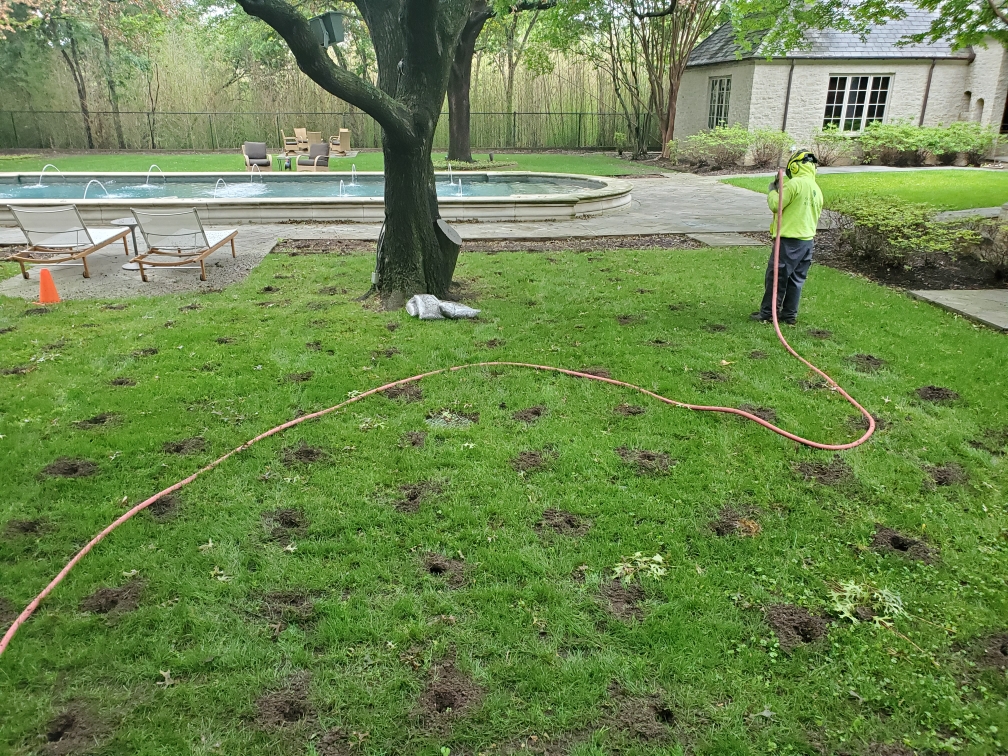
Feeding below the surface gets around that. Nutrients placed just below the grass roots go where the tree benefits the most. Done properly, injection spreads nutrients evenly across the root zone, and it doesn't damage the lawn.
Coverage matters as much as placement. A tree's feeding roots spread well past the edge of its canopy, and good coverage reaches an area about twice as large as the crown spread. Feeding only a ring near the trunk misses most of the roots doing the work.
When it helps
Root feeding earns its keep when a tree is genuinely short on something it needs and the soil can't supply it. That usually comes down to a few situations:
- Trees in heavily managed landscapes. About half the nutrients a tree takes up each year end up in its leaves. In a forest, those leaves fall and give it back. When every leaf is raked and hauled away, year after year, nothing goes back, and the soil runs down.
- Trees that show it, and test it. Pale or yellowing leaves, smaller leaves than normal, early fall color and short twig growth can all point to a nutrient problem. A soil test, and sometimes a leaf analysis, confirms whether it really is one, and which nutrient is actually missing.
- When full soil restoration isn't in the plan. Rebuilding the soil is the deeper fix, but it isn't always possible or wanted. Root feeding can still support a tree's health in the meantime, as we explain in Why Most Tree Problems Start Underground.
When it doesn't
This is the part that matters most, and the part people rarely hear.
When nutrients aren't the problem. In most yards, a struggling tree is far more often short on water, air in the soil, or organic matter than on nutrients. Yellow leaves can come from compacted soil, poor drainage, root damage, girdling roots, salt or disease just as easily as from a missing nutrient. Feeding a tree whose roots are suffocating in compacted clay doesn't fix the suffocation.
When the tree is stressed. It's natural to want to give a struggling tree a boost. But a tree under stress often can't take up nutrients well because its roots are damaged or reduced, and pushing it can make things worse. Too much fertilizer drives new growth in the canopy that the roots can't support, and it uses up energy reserves the tree needs to recover. Overfed trees can end up with more pest and structural problems, not fewer.
A story from the field. Not long ago, a client asked us for a soil test and a fertilizer program for trees that were clearly struggling. It was a reasonable request. But when we looked closer, the real story was underground. The trees had been planted too deeply more than a decade earlier, and ever since, their roots had been under chronic stress. They had never properly established, and the decline the client was seeing came from that. No amount of feeding or fertilizing was going to change it. In fact, a general fertilizer program would have made things worse. Most are built around nitrogen, and nitrogen pushes new growth that a stressed tree with a struggling root system can't support.
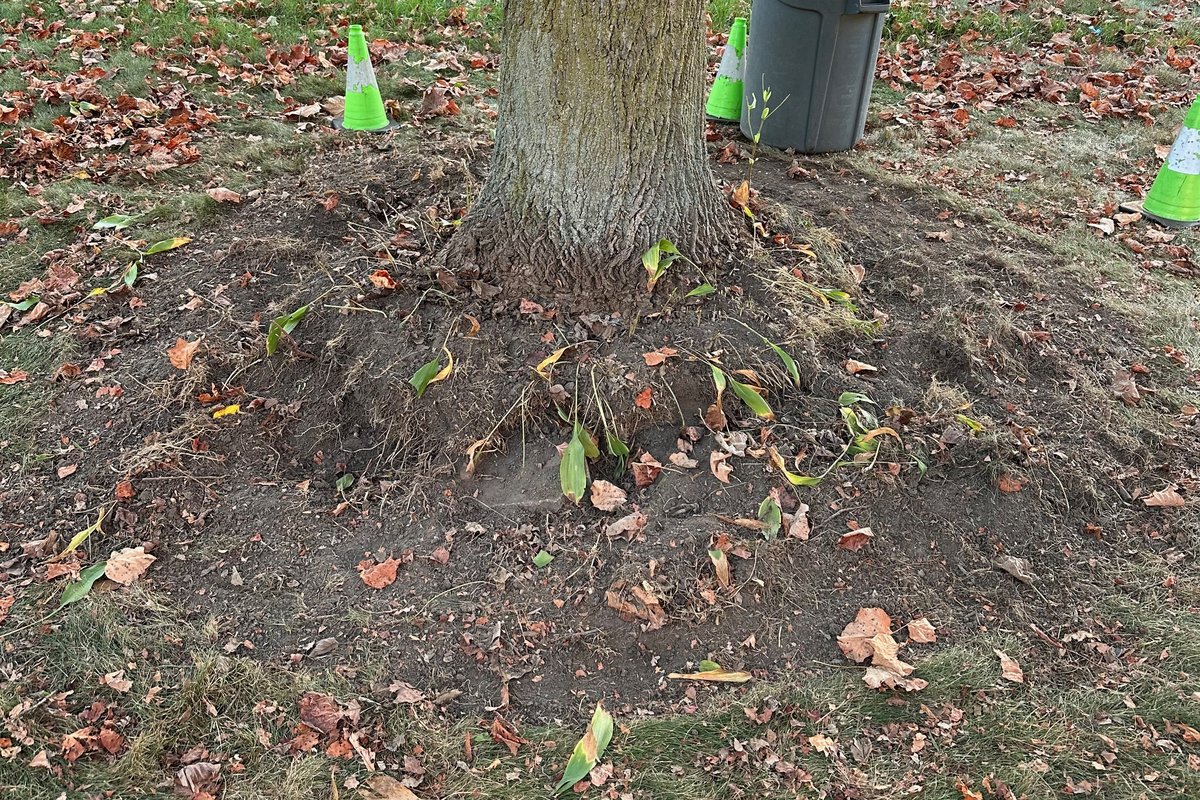
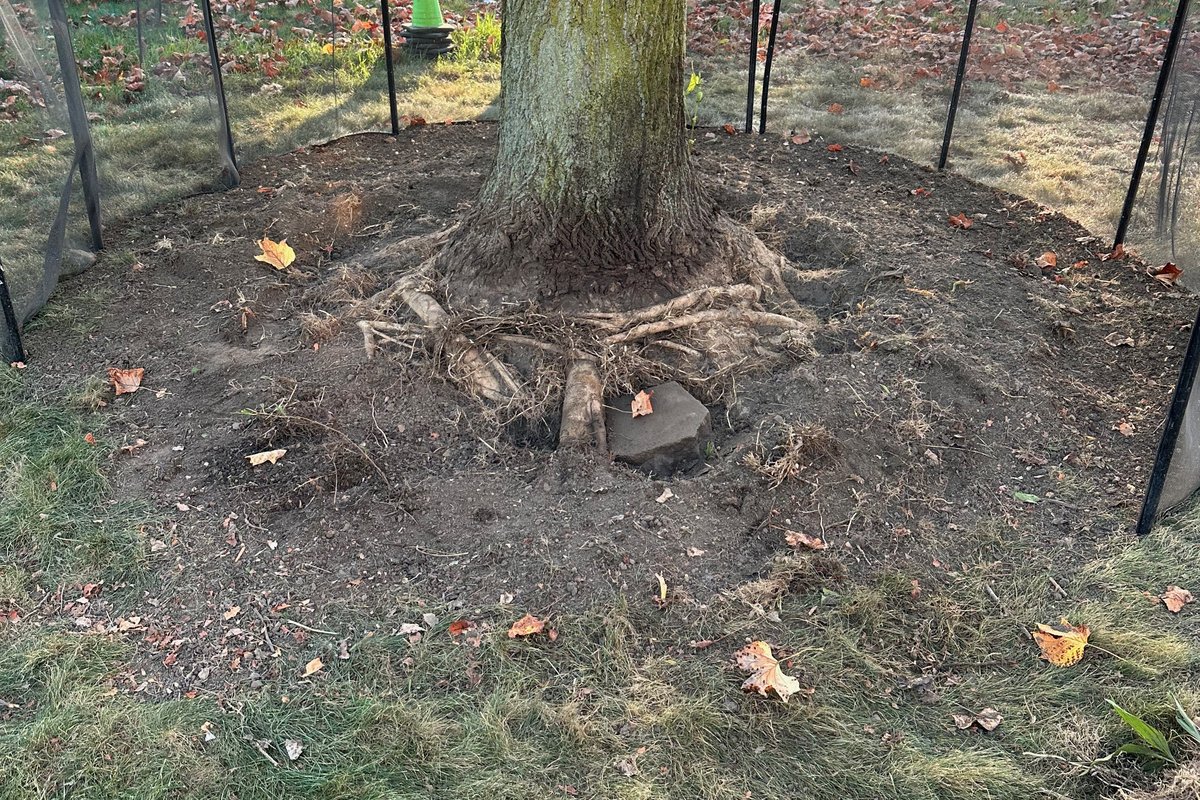
When the lawn is already feeding it. A tree growing in a lawn that's fertilized regularly may already be getting what it needs. Many trees never need fertilizer at all.
Root feeding is a tool, not a tonic. It works when it's answering a question the soil test asked. Used as a yearly routine without a reason, it's often money spent on the wrong problem.
How we approach it
The standards for tree care say fertilization should start with a determination of what the tree actually needs. We take that seriously. Before we recommend feeding a tree, we look at the whole picture: the soil, the roots, the site, how the tree has grown over the last few years, and what's going on in the canopy. When nutrients are part of the story, a soil test tells us which ones.
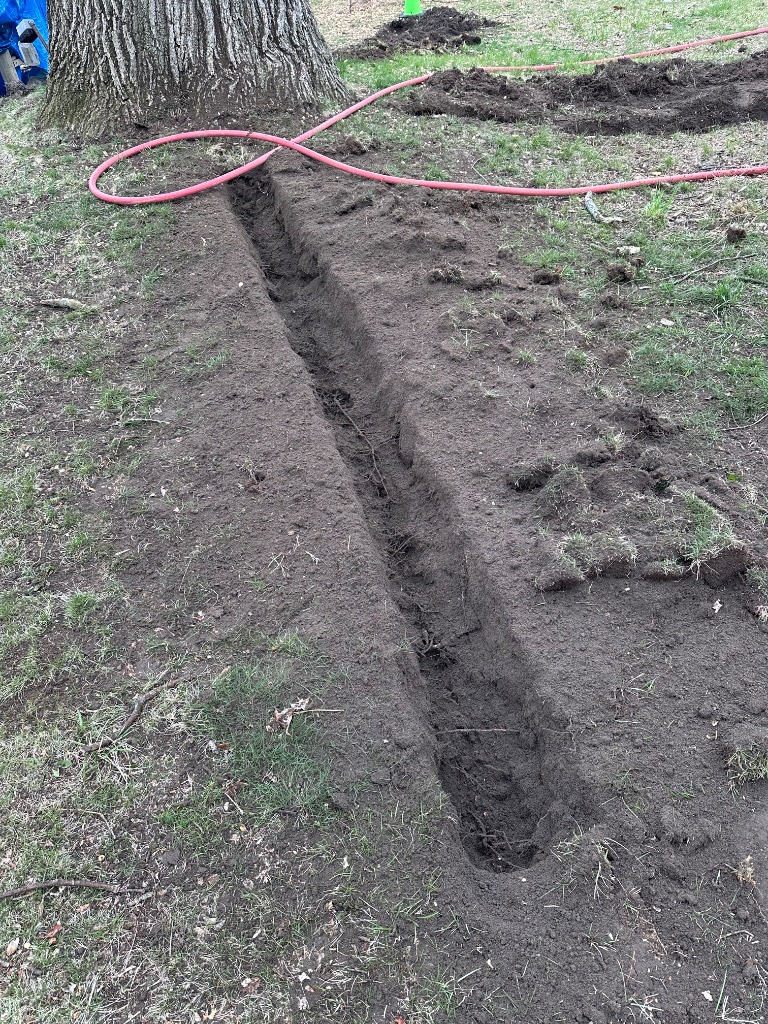
From there, what goes into the ground is matched to what that soil and that tree actually lack, in the right amount, at the right time, and placed where the feeding roots are. It's never a one-size-fits-all mix. Just as often, the most important part of the plan isn't feeding at all: relieving compaction, rebuilding organic matter, mulching the root zone or correcting water. When the soil itself is the problem, the long-term answer is restoring it through air spading, vertical mulching or radial trenching, and feeding becomes a supporting step instead of the whole plan.
Our plant health care follows the ANSI A300 standards for tree care, including soil management and fertilization, and the ISA Best Management Practices for tree and shrub fertilization and soil management.
The bottom line
A healthy tree in healthy soil rarely needs to be fed. A tree that's genuinely short on nutrients can benefit a great deal, as long as the feeding is based on what it's missing and goes where its roots can use it. And a tree that's declining for some other reason needs that reason found first.
If a tree on your property is thinning, yellowing or just not growing like it used to, our ISA Certified Arborist can tell you whether feeding will help, or whether something else is going on underground. Call 248-221-2710 to request a free estimate. We serve Novi and communities across Oakland, Wayne and Washtenaw Counties.
Tree Care in These Areas
Ready to address your tree care needs?
Free options available
Related Articles
Road Salt and Your Trees: How Winter Salt Damages Trees and Shrubs, and How to Protect Them
Road and driveway salt can quietly damage Michigan trees for years. How salt hurts roots and buds, the warning signs, and how to protect your trees.
Why Most Tree Problems Start Underground: Soil Compaction Explained
A thinning canopy often starts with compacted soil. How compaction starves tree roots, the warning signs, and how an ISA arborist restores the root zone.
Your Lawn vs. Your Tree: How Turf, Mowing and Leaf Cleanup Starve Mature Trees
Turf, mowing and bagged leaves quietly starve yard trees. What the research shows, and how to give your tree's roots back what a forest would.