Tree Health
Why Most Tree Problems Start Underground: Soil Compaction Explained
When a tree starts to struggle, everyone looks up. The leaves are smaller, the canopy is thinner, a few branches have died back. It's natural to assume the problem is up there, where you can see it.
Often it isn't. Many struggling trees in Southeast Michigan are reacting to what's happening in the soil around them, and one of the most common causes is something you can't see at all: compaction.
What's happening under your feet
Healthy soil isn't solid. Between the particles of sand, silt and clay are pore spaces, and those spaces hold the air and water that roots depend on. Compaction is simple: the soil particles get pressed together, and those spaces shrink.
That matters because roots breathe. They need oxygen to grow and to take up water and nutrients, and so do the beneficial fungi that partner with them. Compacted soil holds less water, sheds more of it as runoff, and starves roots of oxygen. A tree that loses access to water, nutrients and oxygen can suffer crown dieback or even die. Suffocating roots also weaken a tree's anchoring, leaving it more likely to come down in a storm.
Your tree's roots are closer, and wider, than you think
Most people picture a tree's roots as a mirror image of the canopy, reaching deep into the ground. In reality, the roots that do most of the work are shallow and spread far. Most of a tree's root system sits in the upper layers of soil, where water, nutrients and oxygen are most available. The old idea that roots end at the drip line, the edge of the canopy, usually sells them short. Depending on the site, roots can spread two or more times farther than the tree is tall.
So the lawn you mow, the side yard where the trailer gets parked, and the strip where a builder stacked materials are all root zone.
How soil gets compacted
Compaction comes from weight and repetition:
- Construction: heavy equipment, grading, stockpiled materials, new driveways and additions.
- Vehicles: parking or driving on unpaved ground under trees, including the occasional delivery truck or dumpster.
- Foot traffic: well-worn paths, play areas and gathering spots.
- Wet soil: traffic on wet soil does the most damage. Soil should only be worked when it's dry.
Once it happens, compaction in a yard rarely fixes itself. Compaction in cities and neighborhoods tends to be more permanent than on farmland, because utilities, buildings and plantings make the soil hard to loosen. Around trees there's a bigger obstacle: the roots themselves. Ordinary tilling or digging would destroy the very roots you're trying to help.
Why the damage shows up years later
This is what makes compaction so easy to miss. The harm happens below ground, and the symptoms arrive slowly. It can take several years for a tree to show symptoms of compaction or root damage.
By then, the cause is usually forgotten. The patio went in a few years ago. The tree started thinning last summer. Nobody connects the two. And all too often, the tree gets written off as dying and removed, when the real problem was the ground it was standing in.
Signs your tree may be dealing with compaction
- A canopy that's thinning, or leaves that are smaller or paler than they used to be
- Dieback at the top of the tree or the ends of branches
- Slower growth than similar trees nearby
- Water that puddles or runs off instead of soaking in
- Hard, bare ground or thin turf under the canopy
- Construction, grading or regular parking within the root zone, even years ago
None of these alone proves compaction. Drought, disease, insects and planting problems can look much the same. That's why diagnosis comes first.
How we restore the root zone
The goal isn't to treat the leaves. It's to give roots back what they need: air, water and soil they can grow through. Our soil care follows the ANSI A300 standards for tree care and the ISA Best Management Practices for soil management and root management. It rests on four ideas.
- Find the real cause. A proper assessment looks at the whole root zone and the site's history, not just the canopy. Sometimes that means carefully exposing soil and roots to see what's actually going on.
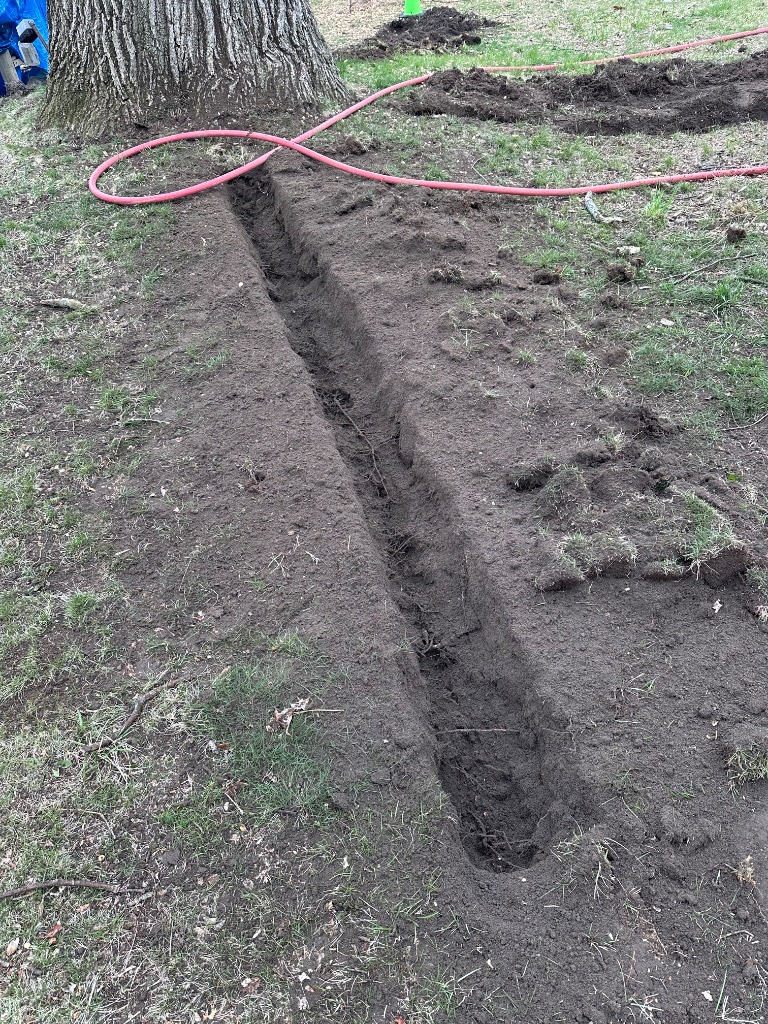
- Loosen the soil without destroying roots. Tools that use compressed air can open up compacted soil around roots without cutting them, so water and air can move freely again. It's the same technique the National Park Service uses to care for historic trees. We do this through air spading, radial trenching and vertical mulching, choosing the approach that fits the tree, the site and how much of the root zone needs help.
- Rebuild the soil. Adding organic matter, such as compost, and keeping a proper layer of mulch helps soil hold water, supports soil life and cushions it against future compaction.
- Keep it from coming back. Rerouting traffic, keeping vehicles off the root zone and planning ahead for future projects protect the work.
Recovery is gradual. Roots need time to grow into improved soil, and the canopy responds after the roots do. Expect steady improvement over seasons, not overnight.
Why the quick fix is tempting, and why it backfires
Here's the honest truth from the field: you rarely see a tree magically saved overnight. Compaction is usually a slow, progressive decline. Left alone, it's often a death sentence, just one that's hard to detect until it's almost too late. That's exactly what makes the real fix a hard sell.
A generic fertilizer program can look like it's working. It pushes a flush of new growth, and that feels like progress. But feeding a stressed tree can make things worse. Heavy fertilizer pushes more canopy growth than a struggling root system can support, throws off the balance between roots and shoots, and drains the energy reserves the tree needs to recover. When the roots are the problem, extra fertilizer aggravates it.
Soil improvement works the other way around. It can take years to show, but it rebuilds the conditions a tree needs for health and longevity, and those benefits keep paying off long after the job is done. No quick feed can claim that.
When full soil restoration isn't in the plan. Not every property owner is ready to restore the soil, and that's the real world. In those situations, deep root feeding can still help. It places nutrients directly into the soil around the tree's roots instead of on the surface, where the lawn takes its share. It isn't the same as rebuilding the soil, and it works best when it's matched to what the soil actually lacks rather than used to force growth. But for a tree that would otherwise get nothing, it's a meaningful step.
Prevention is the best treatment
Very little can be done for roots that have already been crushed or cut, so prevention is the best management there is. If you're planning a project near a tree you value, such as an addition, a new driveway, utility work or major landscaping, bring in an arborist before the equipment arrives. The ANSI A300 standards and the ISA Best Management Practices for managing trees during site development and construction both deal with protecting trees before and during construction, starting with a highly visible physical barrier around trees that are meant to stay.
A few everyday habits help too:
- Keep cars, trailers and equipment off unpaved ground under trees.
- Stay off soggy soil whenever you can.
- Where turf struggles under the canopy, replace it with a wide, shallow ring of mulch kept off the trunk.
- Steer foot traffic onto paths.
The ground your tree stands on
A mature tree took decades to grow, and it can't be replaced on any timeline that matters to you. When one starts to decline, the problem often isn't the tree. It's the ground it's standing in, and soil can be improved.
If a tree on your property is thinning, dying back or just doesn't look the way it used to, our ISA Certified Arborist can assess the root zone and tell you what's really going on. Learn more about our plant health care approach, or call 248-221-2710 to request a free estimate. We serve Novi and communities across Oakland, Wayne and Washtenaw Counties.
Tree Care in These Areas
Ready to address your tree care needs?
Free options available
Related Articles
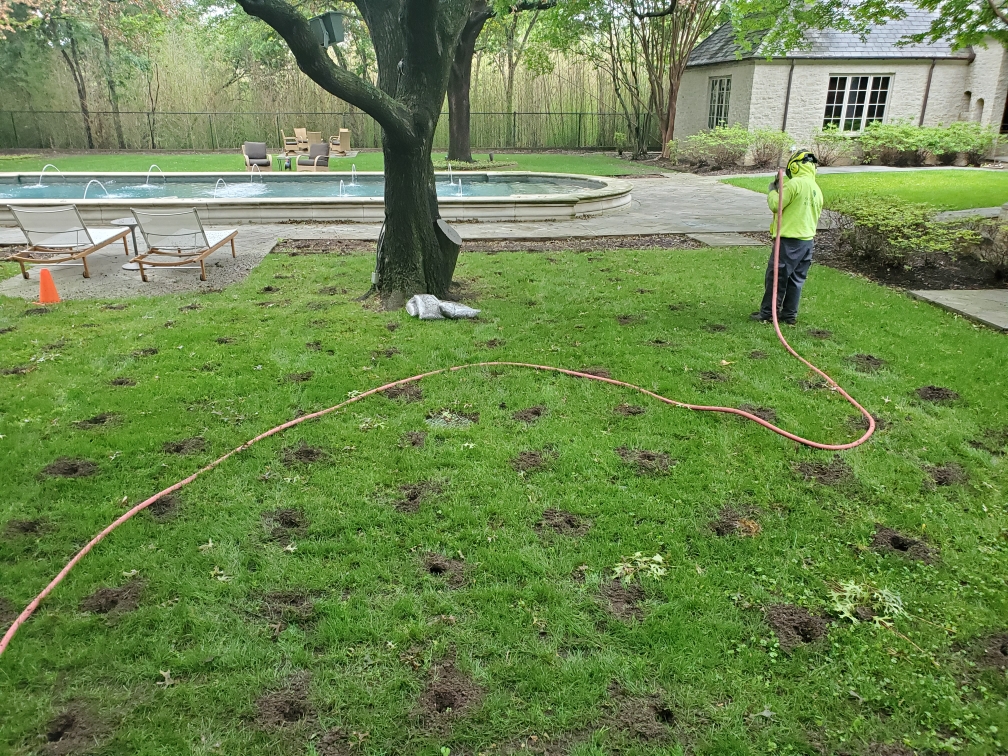
Your Lawn vs. Your Tree: How Turf, Mowing and Leaf Cleanup Starve Mature Trees
Turf, mowing and bagged leaves quietly starve yard trees. What the research shows, and how to give your tree's roots back what a forest would.
Emerald Ash Borer in Southeast Michigan: What Homeowners Need to Know
How to spot emerald ash borer, when an ash tree can still be protected, and when removal is the honest answer. From an ISA Certified Arborist in Novi.
Is My Tree Safe? What a Professional Tree Risk Assessment Actually Tells You
Every tree carries some risk. Here's how a qualified arborist weighs real risk, why a defect isn't a death sentence, and when removal is the right call.