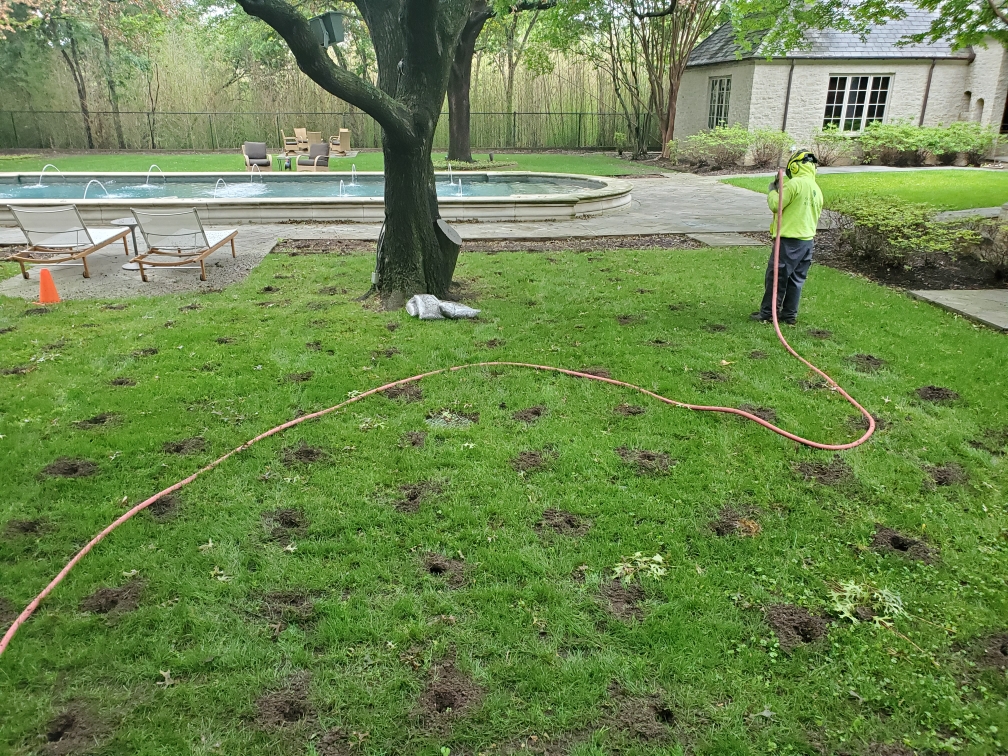
Vertical Mulching
A proven soil amendment technique that restores water infiltration, improves nutrient uptake, and revitalizes stressed or declining trees. Breaks up compacted soil and introduces beneficial organic matter and microbes directly to the root zone where they're needed most.
Schedule Your ConsultationFree alternatives available
How It Works
Vertical mulching is a soil amendment technique where organic material (compost, aged bark, wood chips) is installed vertically into the root zone of a tree. Using air pressure or hand tools, we create narrow trenches from the surface down to 12-18 inches, following a radial pattern from the tree's root collar outward.
This breaks up compacted soil, improves water infiltration, increases oxygen availability to roots, and introduces beneficial microbes and organic matter directly where they're needed most.
Water Infiltration
Breaks up hardpan, allowing water to penetrate deeper into the root zone.
Soil Biology
Organic matter feeds beneficial fungi and bacteria that improve nutrient availability.
Root Vitality
Improves oxygen and nutrient uptake, triggering visible growth response in stressed trees.
The Process
Assessment
Evaluate soil compaction, drainage, and tree decline symptoms to confirm vertical mulching is appropriate.
Trenching
Create 12-18" deep slots radiating from trunk, spaced 12-24" apart, following the root zone pattern.
Amendment
Fill trenches with quality compost and organic material, working from center outward.
Watering
Water thoroughly to settle material and activate beneficial microbes in the amended soil.
Proper Diagnosis First
We always assess why a tree is struggling before recommending treatment. If decline is due to pests, disease, or poor species choice, soil amendment alone won't solve the problem.
Key Benefits
Breaks up hardpan and compacted soil, allowing water to penetrate deeper and reach the root zone
Organic matter feeds beneficial fungi and bacteria that improve nutrient availability
Improves oxygen availability to roots, triggering visible growth response
Restores vitality to stressed or declining trees without removal
Addresses drainage and water infiltration issues systematically
Provides long-term soil health benefits that compound over years
When to Consider It
Compacted Urban or Lawn Soils
Trees in heavily trafficked areas, construction zones, or lawns where soil has been compacted over years.
Declining or Stressed Trees
Trees showing thinning canopy, dieback, reduced growth, or poor color despite adequate water.
Poor Drainage or Runoff
Areas where water pools or runs off instead of soaking in, indicating soil structure problems.
Post-Construction Recovery
Restoring tree vitality after development, grading, or soil disturbance during property work.
Frequently Asked Questions
How long until I see results?
Real tree recovery is slow and progressive—not artificial or forced. Expect subtle improvements over months and more noticeable vitality over years. If someone promises rapid transformation, be skeptical. We focus on sustainable, genuine health, not quick fixes.
Is this the same as air spading?
They're different tools for similar goals. Vertical mulching is less invasive and can span much further into the root zone with ease. Air spading is more disruptive to the root system but is the best option if cost and disruption aren't priorities—it's superior for tree preservation when budget allows.
Will vertical mulching save a dying tree?
It depends on the cause. If a tree is declining due to soil compaction or poor drainage, yes. If it's failing due to untreatable disease, pest damage, or poor species choice, soil amendment alone won't reverse the decline. We assess the root cause first.
How often do trees need vertical mulching?
Typically, a single treatment provides years of benefit. Highly compacted urban soils or severely stressed trees may benefit from a second treatment 2-3 years later.
Can vertical mulching damage the tree?
No. When performed correctly, it relieves soil stress and improves root health. It's a restorative practice designed to support, not harm, the tree's root system.
Is this better than surface mulching?
Complementary, not competitive. Surface mulch (3-4" deep, applied entirely off the trunk and root flare with as wide a radius as possible) helps regulate temperature and moisture. Vertical mulching addresses deep soil compaction. Both together create optimal conditions.
Is Your Tree a Candidate?
Contact us today for a free, no-obligation assessment from one of our certified arborists.
Call 248-221-2710Email Us