Tree Health
Winter Injury: Frost Cracks, Sunscald and Winter Burn, and How to Protect Your Trees
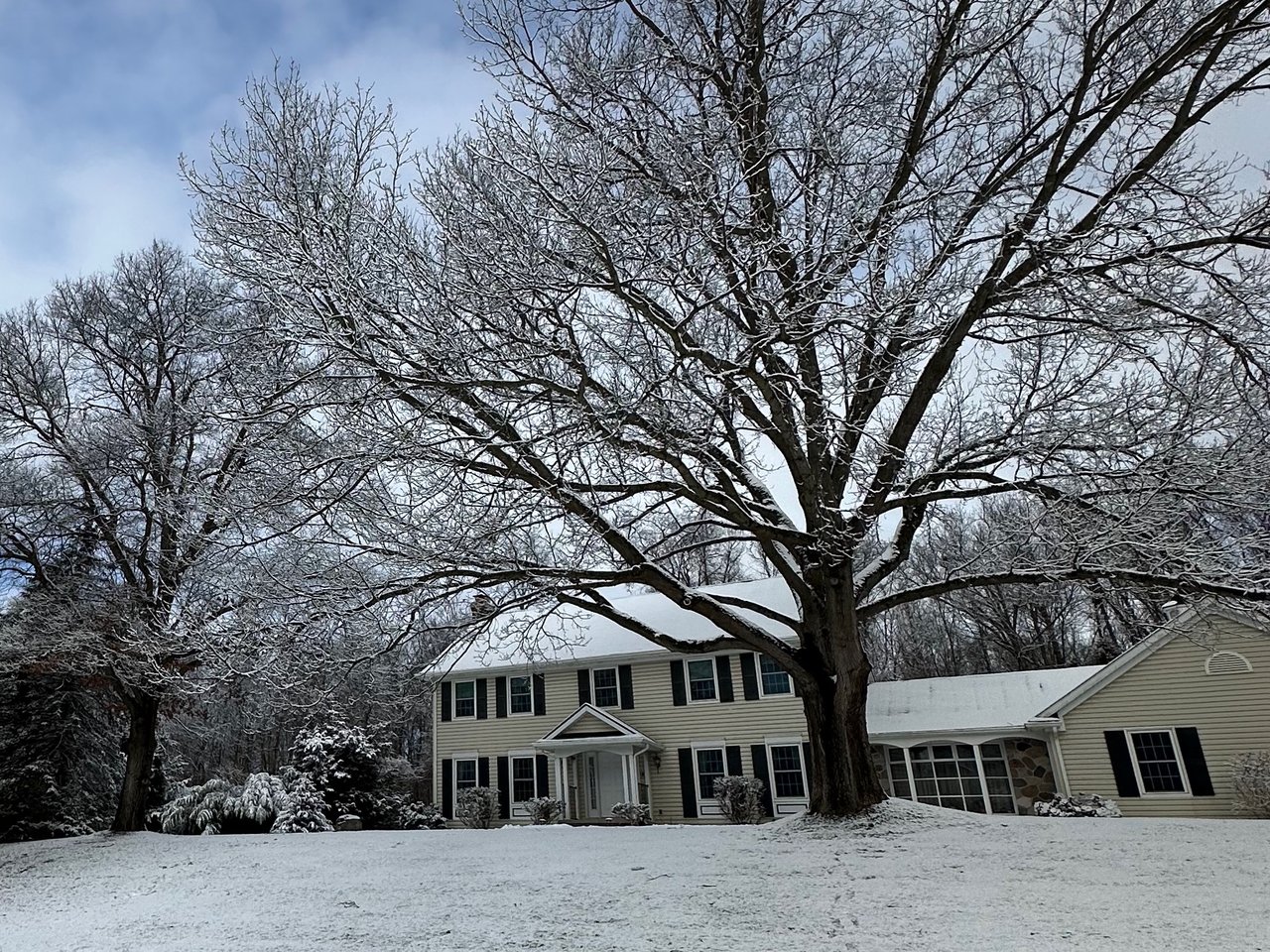
Most of the damage winter does to a tree happens on a bright, beautiful day. The sun is out, the snow is sparkling, and the bark on the south side of the trunk is warming up far more than the air around it. Then the sun drops behind a house or a cloud, the temperature falls fast, and the tree pays for it.
That's the strange thing about winter injury. Michigan trees are built for cold. What hurts them is the swing: warm to frozen in minutes, sun and wind pulling water out of evergreen needles while the ground is frozen solid, a warm spell in February that wakes a tree up just before the next hard freeze. And because the damage rarely shows until spring, most people never connect a cracked trunk or a brown arborvitae to a sunny afternoon in January.
Here are the three kinds of winter injury we see most across Southeast Michigan, how to tell them apart, and what actually helps.
Frost cracks: when a trunk splits overnight
A frost crack is a long, vertical split in the trunk, often on the south or southwest side. Some people hear them happen. When a crack lets go, it can make a sharp, loud crack, sometimes compared to a gunshot.
Here's what causes it. Through the day, the sun warms the bark and the outer wood. When the temperature drops quickly, the outer layer cools and shrinks faster than the wood deeper inside. Something has to give, and the trunk splits.
Frost cracks often start at an older wound: a mower strike, an old pruning wound, a crack from an earlier winter. Once a tree has one, it tends to open again on cold days and close up in warmer weather, sometimes for years.
A frost crack usually doesn't kill a tree on its own. A small crack can seal over as the tree grows wound wood around it. But every crack is an open wound in the tree's protective bark, and that's a way in for decay. A crack that opens year after year, or several cracks on one trunk, can weaken the tree's structure over time. That's when it's worth having an arborist look at it.
What not to do: don't paint, tar, fill or seal a frost crack. Wound dressings don't help a tree heal, and they can get in the way of the tree's own defenses. Trees don't heal the way we do. They wall off damage and grow new wood around it, a process Dr. Alex Shigo spent his career explaining. The best thing you can do is keep the tree healthy enough to do that job well.
Sunscald: the southwest side of young trees
Sunscald looks different. Instead of a clean split, you'll see a patch of bark that's sunken, discolored, dry or cracked, usually on the south or southwest side of the trunk. Over time the dead bark can loosen and fall away, leaving a long wound.
It happens the same way a frost crack starts, but it kills the living tissue instead of splitting the wood. On a sunny winter day, the sun-facing side of a trunk can get much warmer than the air, enough to coax the thin layer of living tissue under the bark out of its winter rest. When the sun disappears and the bark freezes again, that tissue dies.
Young trees and thin-barked trees are the ones at risk. Maples, lindens, honeylocusts, crabapples, cherries and other fruit trees, birches and London planes are all common in Michigan yards, and all have the thin bark that makes sunscald possible. As a tree matures and its bark thickens, the risk drops a lot.
How to protect a young tree:
- Use a white or light-colored tree guard or wrap on young and thin-barked trees. White reflects the sun. Dark wraps and guards absorb it and can make the problem worse.
- Put it on in late fall and take it off in spring, once the nights stay above freezing. Left on all year, a wrap holds moisture against the bark and invites rot and insects, which defeats the purpose.
- Plan on a few winters, not one. A newly planted tree generally needs protection for at least its first two winters, and thin-barked species can benefit for several more, until the bark thickens up.
- Choose a guard that fits loosely, with room for air to move around the trunk.
This is one of the easiest things to get right, and one of the most common things we see missed on newly planted trees.
Winter burn: brown evergreens in spring
Winter burn is the one most homeowners notice, because it shows up all at once. The snow melts, spring arrives, and an arborvitae, yew, boxwood or hemlock that looked fine in December is suddenly brown, often on the south, southwest or windward side.
Evergreens keep their leaves all winter, and those leaves keep losing water, especially on sunny, windy days. In summer, the roots replace that water. In winter, with the ground frozen, they can't. The needles or leaves dry out faster than the tree can resupply them, and they die. The parts buried under snow or facing away from the sun are usually spared, which is why you'll often see a sharp line where the browning stops.
Yew, arborvitae and hemlock are among the most likely to burn, along with boxwood, rhododendron and other broadleaf evergreens. Evergreens planted in the last year or two, with smaller root systems, are especially vulnerable. So are plants in exposed, windy spots, against a sunny south wall or near a road, where winter salt adds to the drying. We covered salt in Road Salt and Your Trees.
How to help your evergreens through winter:
- Water through the fall until the ground freezes. An evergreen that goes into winter well-watered has more to lose before it gets into trouble. One deep soak right before freeze-up isn't enough on its own. Steady watering through a dry fall is what counts.
- Mulch the root zone. A proper layer of mulch holds moisture and evens out soil temperature. Keep it pulled back from the trunk.
- Screen, don't wrap. For a vulnerable evergreen in an exposed spot, a burlap screen on stakes, set a little away from the plant on the sunny and windy sides, blocks sun and wind. Wrapping burlap tightly around the plant itself can trap heat and moisture and do more harm than good.
- Think about the spot. If an evergreen burns every winter, the location may simply be too harsh for that plant. Sometimes the kindest long-term answer is the right plant in that place.
If your evergreen is already brown: be patient. The brown foliage itself is gone and won't green up, but the buds are often still alive and can push new growth in spring. Scratch a small twig with a fingernail. Green underneath is a good sign. Wait until new growth starts in spring before pruning anything, so you can see exactly what's dead and what isn't, and remove only that.
How fall care sets up winter injury
A lot of winter damage gets set up months earlier. Pruning or fertilizing in late summer can push a flush of tender new growth that doesn't have time to harden off before the first hard freeze. That growth is the first to die back. We explained the fertilizer side of this in Fertilizing Trees the Right Way.
The same goes for a tree going into winter stressed. A tree short on water, struggling with compacted soil or recovering from root damage has less in reserve to handle a hard winter. In our experience, the trees that come through winter best are the ones that went into it healthy. That's why so much of what we do in plant health care happens long before the first snow.
What we look for after winter
Spring is when winter injury shows itself, and it's also when it gets confused with other problems. Browning on an evergreen could be winter burn, salt, drought from the summer before, root problems or disease. A crack in a trunk could be a frost crack, or it could be a structural defect that needs a closer look. They look alike and need very different answers.
When we look at a tree after winter, we're reading the pattern: which side the damage is on, where it starts and stops, how the rest of the tree looks, and what's going on in the root zone. That tells us whether a tree just needs time and good care, whether dead wood needs to come out, or whether a crack has become a safety concern. Any dead or damaged wood we remove is pruned to the ANSI A300 standards for tree care and the ISA Best Management Practices for tree pruning, and our plant health care follows the ISA Best Management Practices for integrated pest management, which start with diagnosing the real cause.
The bottom line
Most winter injury comes down to sun, wind and fast temperature swings, not the cold itself. Protect young, thin-barked trunks with a light-colored guard, keep evergreens watered until the ground freezes, screen the ones in harsh spots, and skip late-summer pruning and fertilizing. And when spring shows you something you don't like, give the tree a little time and a proper diagnosis before reaching for the pruners.
If a tree on your property has a crack in its trunk, a brown evergreen or damage you're not sure about, our ISA Certified Arborist can tell you what happened and what the tree needs. Call 248-221-2710 to request a free estimate. We serve Novi and communities across Oakland, Wayne and Washtenaw Counties.
Tree Care in These Areas
Ready to address your tree care needs?
Free options available
Related Articles
Fertilizing Trees the Right Way: Why a Soil Test Comes First and Generic Fertilizer Can Hurt
Yellow leaves don't always mean a hungry tree. An ISA Certified Arborist explains why a soil test comes first and how generic fertilizer can hurt.
Deep Root Feeding: What It Is, When It Helps, and When It Doesn't
Deep root feeding can help a tree, or be money spent on the wrong problem. An ISA Certified Arborist explains what it is, when it helps and when it doesn't.
Road Salt and Your Trees: How Winter Salt Damages Trees and Shrubs, and How to Protect Them
Road and driveway salt can quietly damage Michigan trees for years. How salt hurts roots and buds, the warning signs, and how to protect your trees.