Tree Health
Fertilizing Trees the Right Way: Why a Soil Test Comes First and Generic Fertilizer Can Hurt
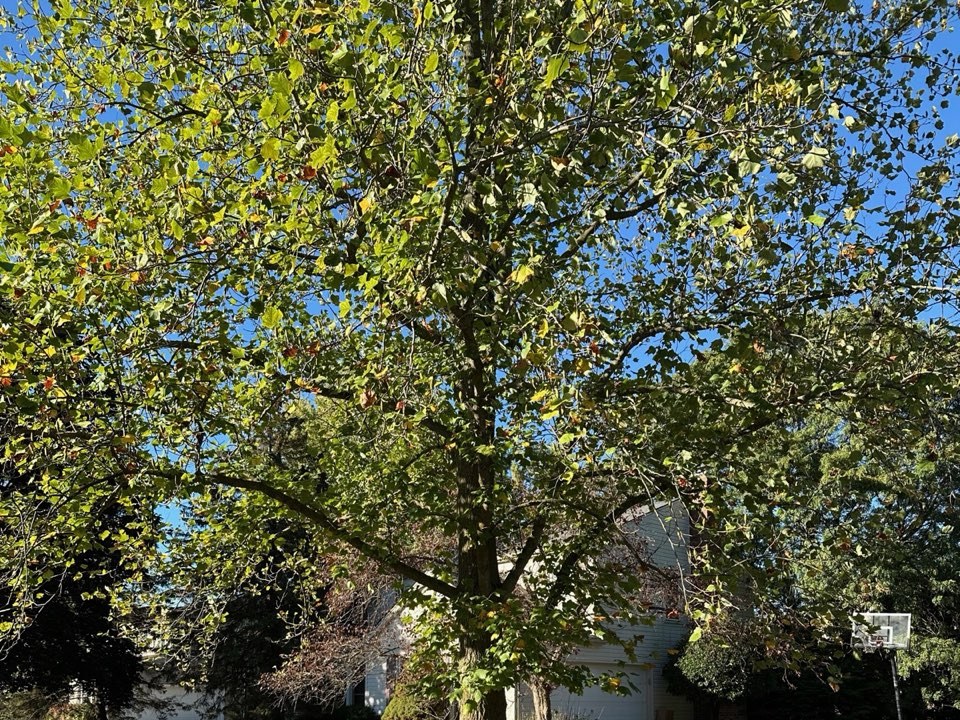
A bag of tree fertilizer can tell you a lot about what's inside it. What it can't tell you is what your soil already has, what it's missing, or whether your tree needs anything at all.
That's the problem with generic fertilizer. It answers a question nobody asked. Sometimes it does nothing. Sometimes it makes things worse. And sometimes it covers up the real problem for another year while the tree keeps declining.
Yellow leaves don't always mean a hungry tree
When a tree's leaves turn pale or yellow, most people reach for fertilizer. It makes sense. But one of the most common causes of yellowing leaves has nothing to do with how much food is in the soil.
Look closely at the leaf. If the veins stay dark green while the tissue between them turns yellow, the tree may be short on iron or manganese. Here's the surprising part: usually there's plenty of iron in the soil. The tree just can't get to it. When soil pH runs too high, those nutrients get locked up in a form the roots can't absorb, even though they're physically right there.
Some trees are especially sensitive to this. Pin oak and sweetgum are prone to iron problems. White oak, white pine and red maple are prone to manganese problems. Plant one of these in the wrong soil and it can yellow year after year, no matter how much it's fed.
Adding a general fertilizer doesn't fix that. The tree wasn't short on nitrogen to begin with, and the locked-up nutrients stay locked up. Quick fixes can green a tree up for a season, but if the soil itself isn't addressed, the symptoms come back. Real correction means working on the soil the tree is growing in, and for future plantings, choosing species suited to that soil.
The only way to know which situation you're in is to test.
What a soil test tells us
A soil test is the starting point for any fertilization decision, and the standards for tree care say so: fertilization should begin with a determination of what the tree actually needs.
A good soil test tells us:
- pH, which controls whether the nutrients in the soil are available to the tree at all.
- Nutrient levels, so we know what's adequate and what's genuinely low.
- Organic matter, which tells us a lot about the soil's overall health and how much it can feed the tree on its own.
That last one matters more than most people think. Soil with good organic matter often supplies what a tree needs without any added fertilizer. Soil that's been stripped, compacted or scraped down to subsoil usually doesn't. We wrote about how that happens in Why Most Tree Problems Start Underground.
A test also tells us what not to add. Many soils already have plenty of phosphorus and potassium. Once those are in the root zone, they tend to stay there for years. Adding more doesn't help the tree. It just adds to what can wash into our lakes and streams.
How generic fertilizer can hurt a tree
More isn't better with trees. Here's what over-fertilizing can do:
- It pushes the wrong kind of growth. Too much nitrogen produces long, soft, succulent shoots. That growth is exactly what aphids and other sucking insects are drawn to.
- It shifts the tree out of balance. Nitrogen favors the canopy over the roots. A heavily fed tree can put out more leaves than its roots can support through summer heat and wind.
- It can slow a new tree's roots. A newly planted tree puts most of its energy into growing roots. Nitrogen during that establishment period can suppress root growth instead of helping it.
- It can burn roots. Fertilizers are salts. Too much in one place can damage the fine roots that do the feeding.
- It can set a tree up for winter injury. Fertilizer applied in late summer or early fall can trigger a late flush of tender growth that isn't ready when the first hard freeze arrives.
None of this shows up the day the fertilizer goes down. It shows up as a tree that seemed fine, got fed every year, and still went downhill.
Not all nitrogen behaves the same
When a tree does need nitrogen, the form matters. Some nitrogen dissolves quickly and becomes available all at once. It's cheap and fast, but rain and watering can carry it down past the roots, and it's the kind most likely to end up in groundwater, especially in sandy soils.
Slow-release nitrogen feeds the tree gradually over the season. It costs more, but it's gentler on the tree, more even in how it feeds, and less likely to pollute our water. For trees, slow and steady is generally the better choice.
Timing matters as much as what you use
When fertilizing is called for, timing makes a real difference:
- Early spring or after the leaves drop in fall are generally the right windows, when the tree can use nutrients without being pushed into growth it can't support.
- Late summer and early fall are generally avoided, because the new growth it stimulates may not toughen up before winter.
- Never fertilize a tree in drought. A drought-stressed tree needs water first. Feeding it can add to the stress.
- Don't fertilize frozen ground or before a heavy storm. It washes away instead of reaching the roots.
And if something else is limiting the tree, like compacted soil, too little water or a root system with nowhere to grow, forcing growth with fertilizer works against it. Fix the limiting factor first.
How we approach fertilization
At Momentum, fertilization is never a default line item. It's a decision we make after we understand the tree and the soil.
We start with an assessment of the whole tree: the canopy, the root zone, the site, and how the tree has grown over the last few years. When nutrients look like part of the story, a soil test tells us which ones, and whether pH is keeping the tree from what's already there. From there, anything we add is matched to that soil and that tree, in the right amount, in the right form and at the right time. Just as often, the bigger win is improving the soil itself: relieving compaction, building organic matter and mulching the root zone, so the tree can feed itself the way it would in a forest.
When nutrients do need to reach the roots, how they get there matters too. We explain that in Deep Root Feeding: What It Is, When It Helps, and When It Doesn't.
Our plant health care follows the ANSI A300 standards for tree care, including soil management and fertilization, and the ISA Best Management Practices for tree and shrub fertilization and soil management.
The bottom line
Fertilizer is a tool, and like any tool, it works when it's the right one for the job. A soil test tells us whether it is. A tree that's yellowing because of pH needs a different answer than a tree that's genuinely short on nitrogen, and a tree that's declining for another reason needs that reason found first.
If a tree on your property is yellowing, thinning or just not looking like itself, our ISA Certified Arborist can tell you what the soil is really saying before anything goes into the ground. Call 248-221-2710 to request a free estimate. We serve Novi and communities across Oakland, Wayne and Washtenaw Counties.
Tree Care in These Areas
Ready to address your tree care needs?
Free options available
Related Articles
Deep Root Feeding: What It Is, When It Helps, and When It Doesn't
Deep root feeding can help a tree, or be money spent on the wrong problem. An ISA Certified Arborist explains what it is, when it helps and when it doesn't.
Road Salt and Your Trees: How Winter Salt Damages Trees and Shrubs, and How to Protect Them
Road and driveway salt can quietly damage Michigan trees for years. How salt hurts roots and buds, the warning signs, and how to protect your trees.
Why Most Tree Problems Start Underground: Soil Compaction Explained
A thinning canopy often starts with compacted soil. How compaction starves tree roots, the warning signs, and how an ISA arborist restores the root zone.