Plant Health Care · Farmington Hills, MI
Tulip Tree Soil Restoration
Written by Mounir Fahim, ISA Certified Arborist, Momentum Tree Experts
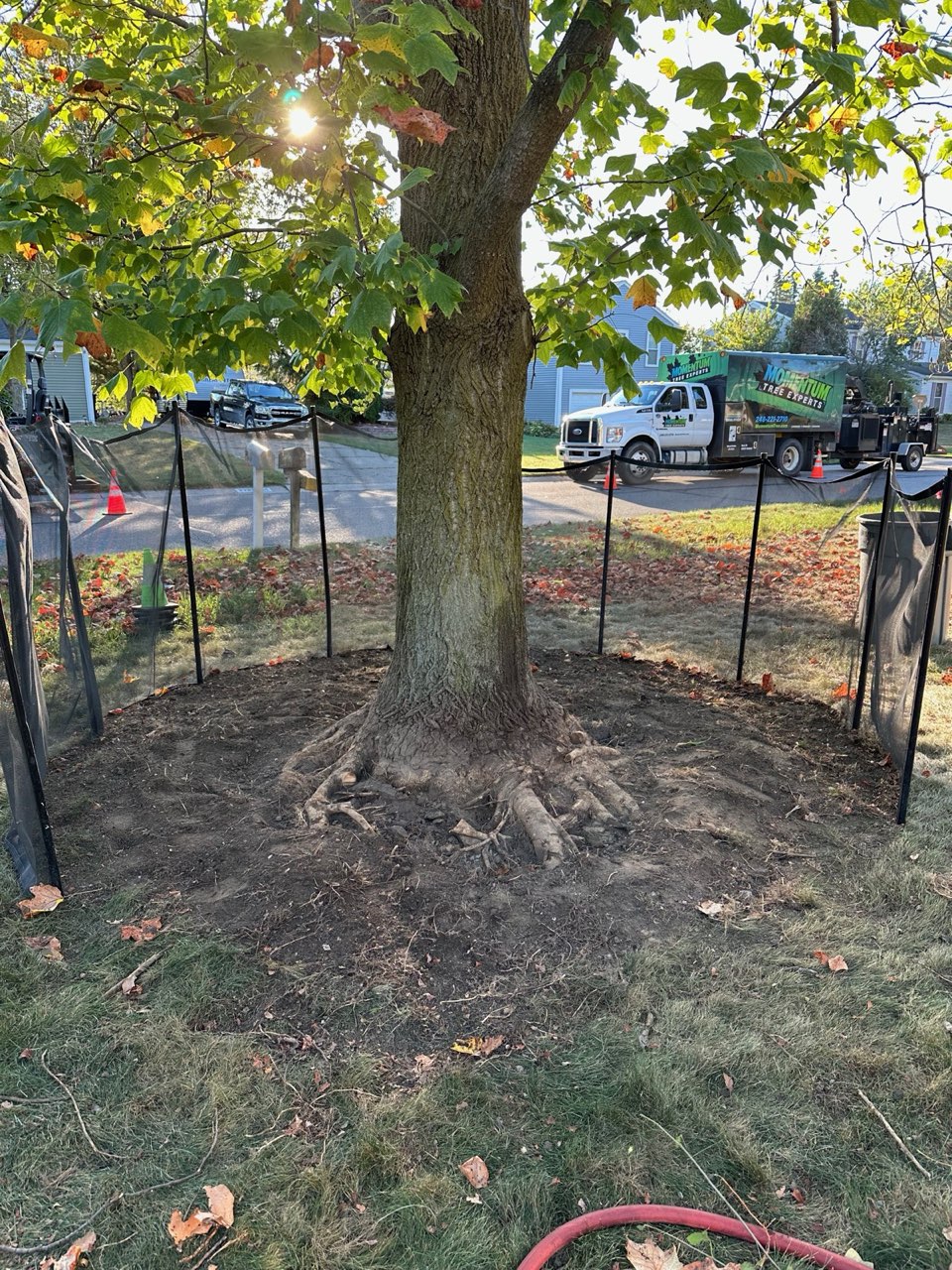
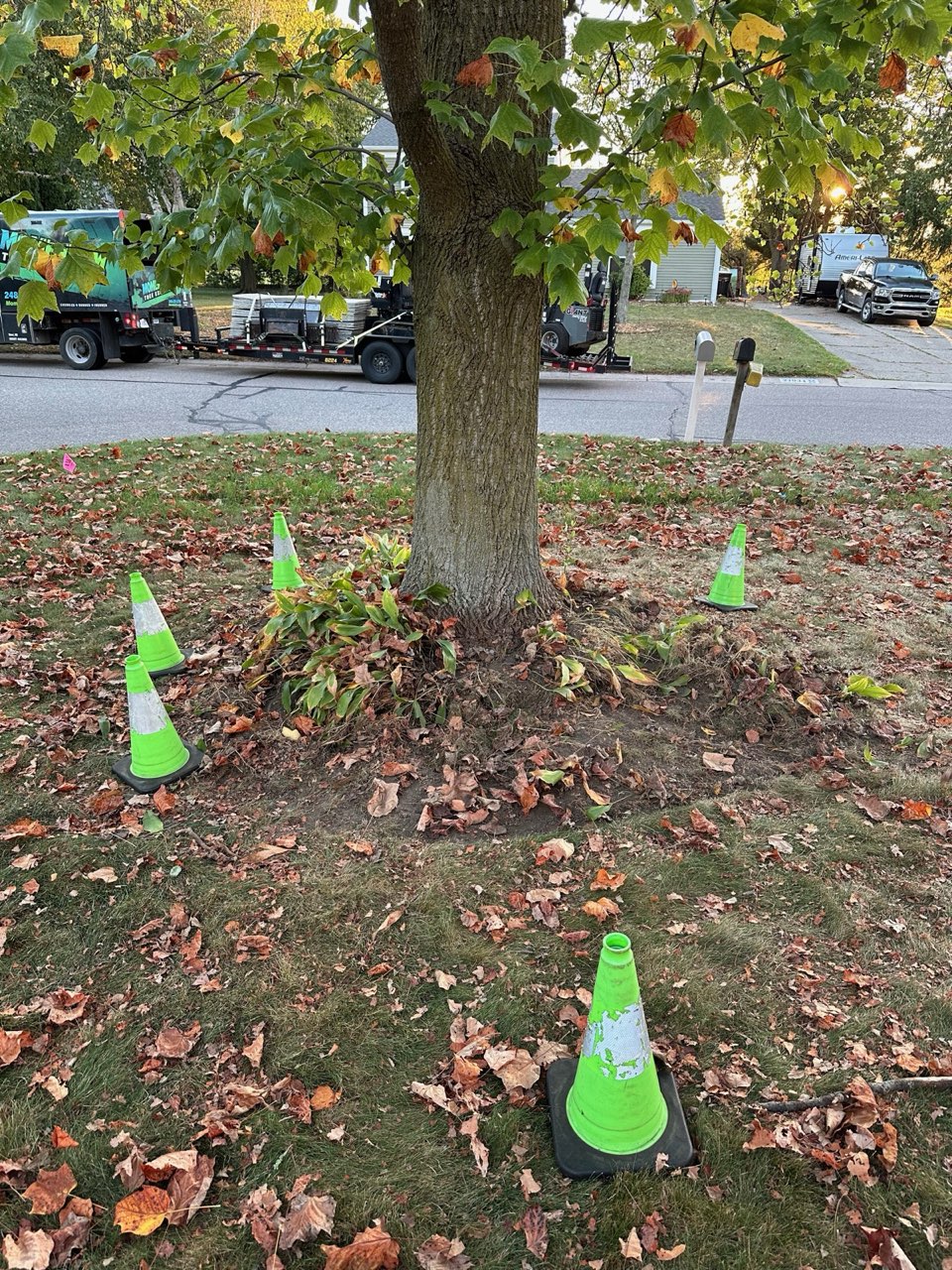
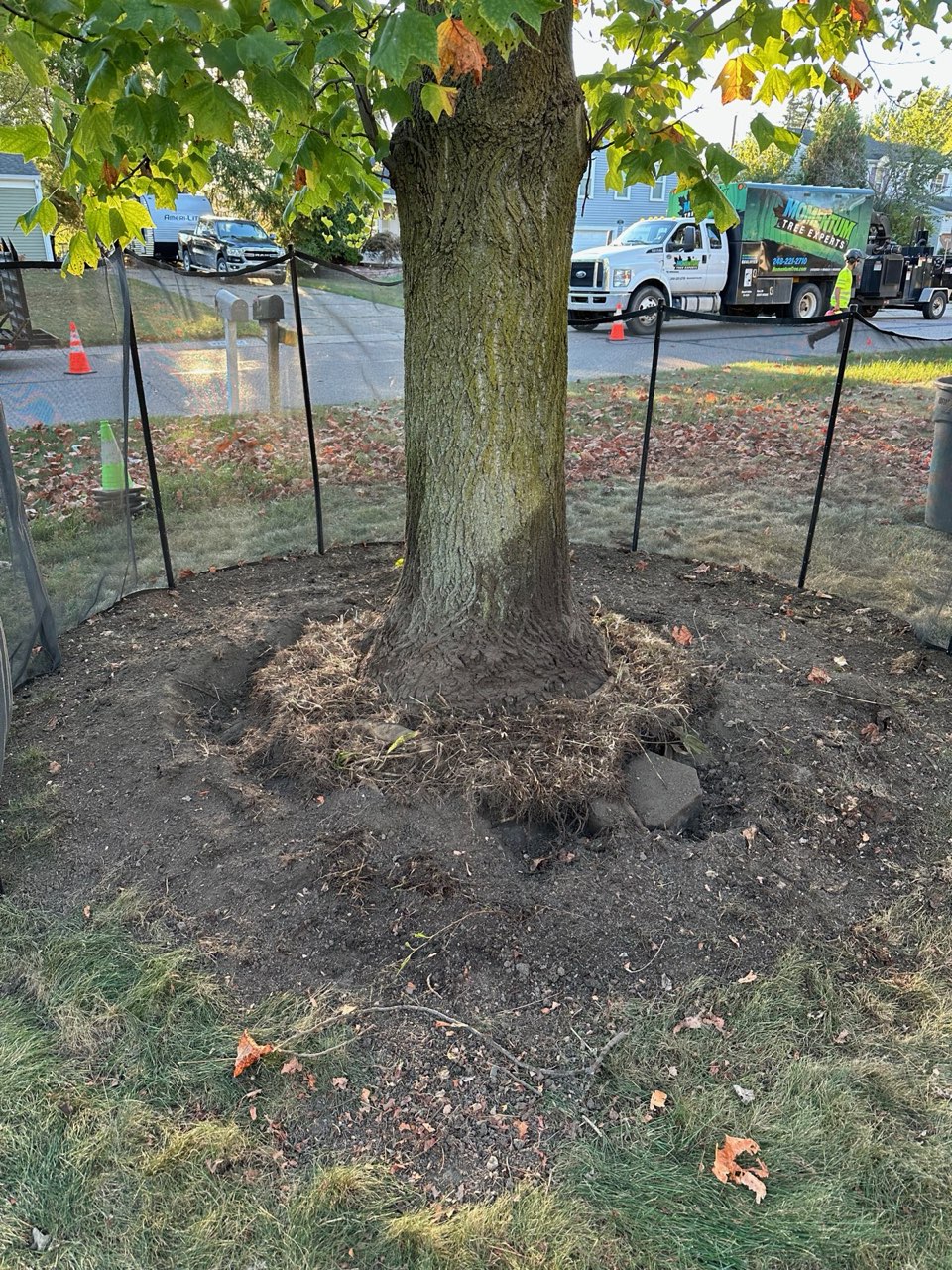
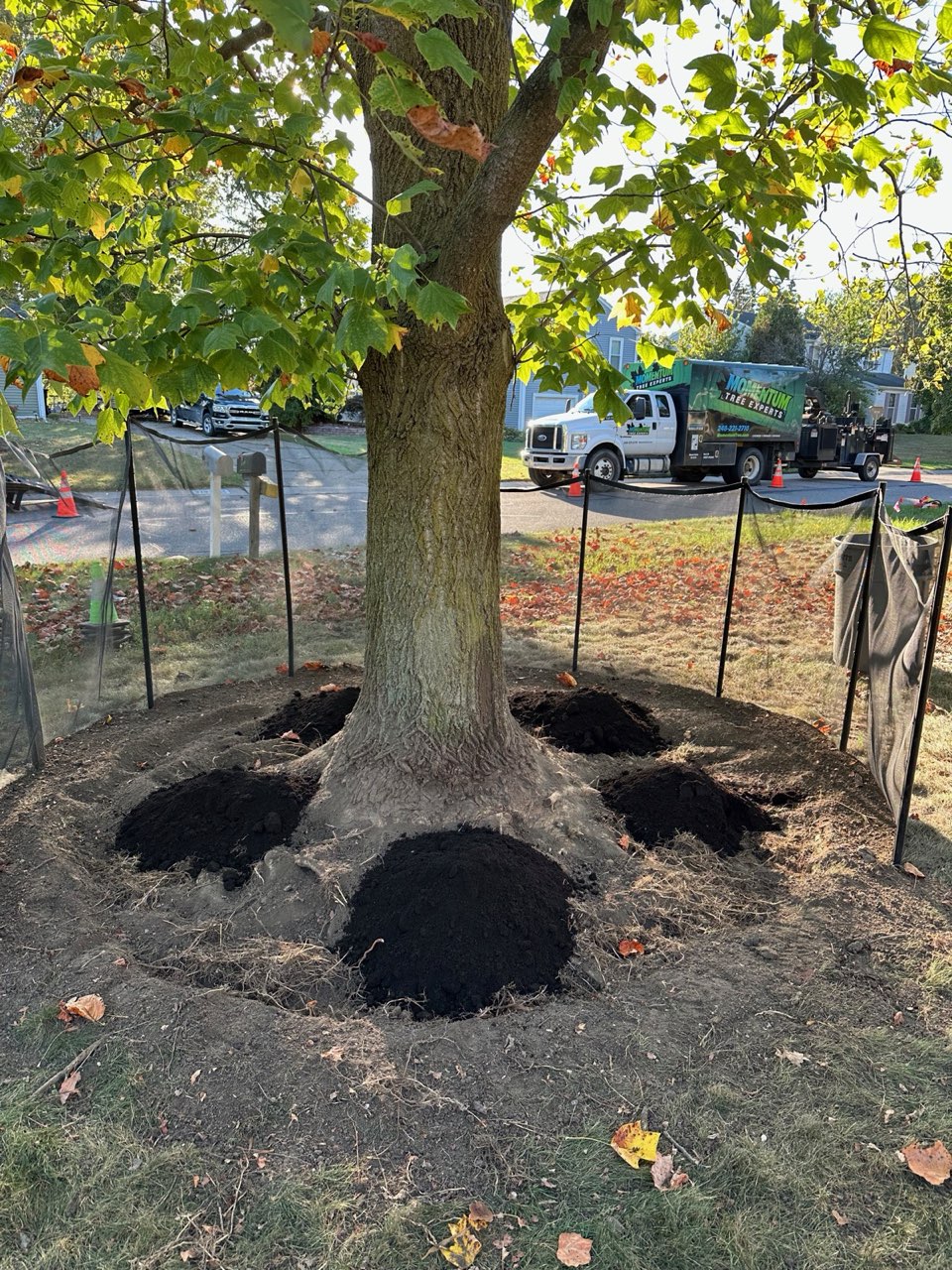
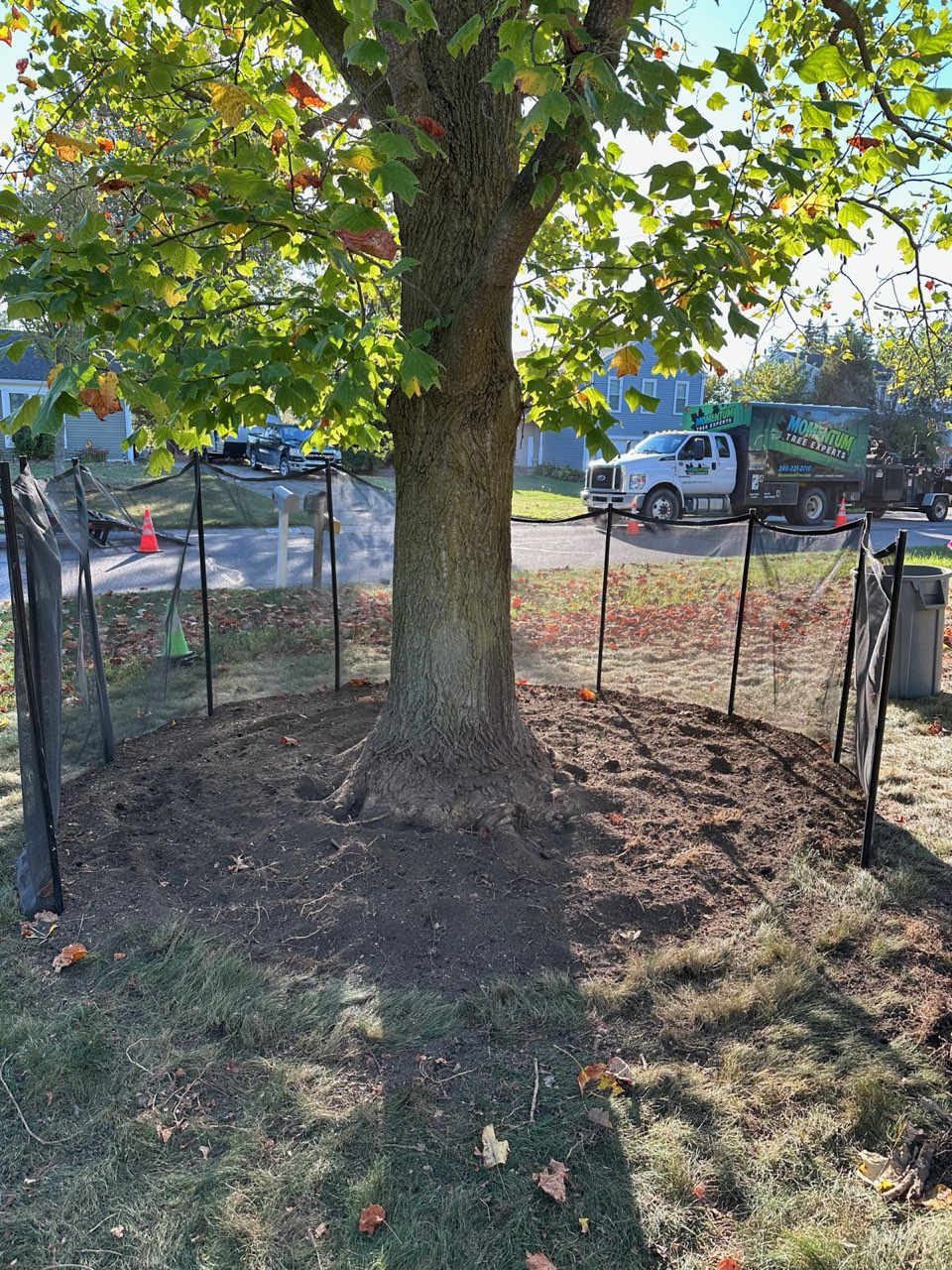
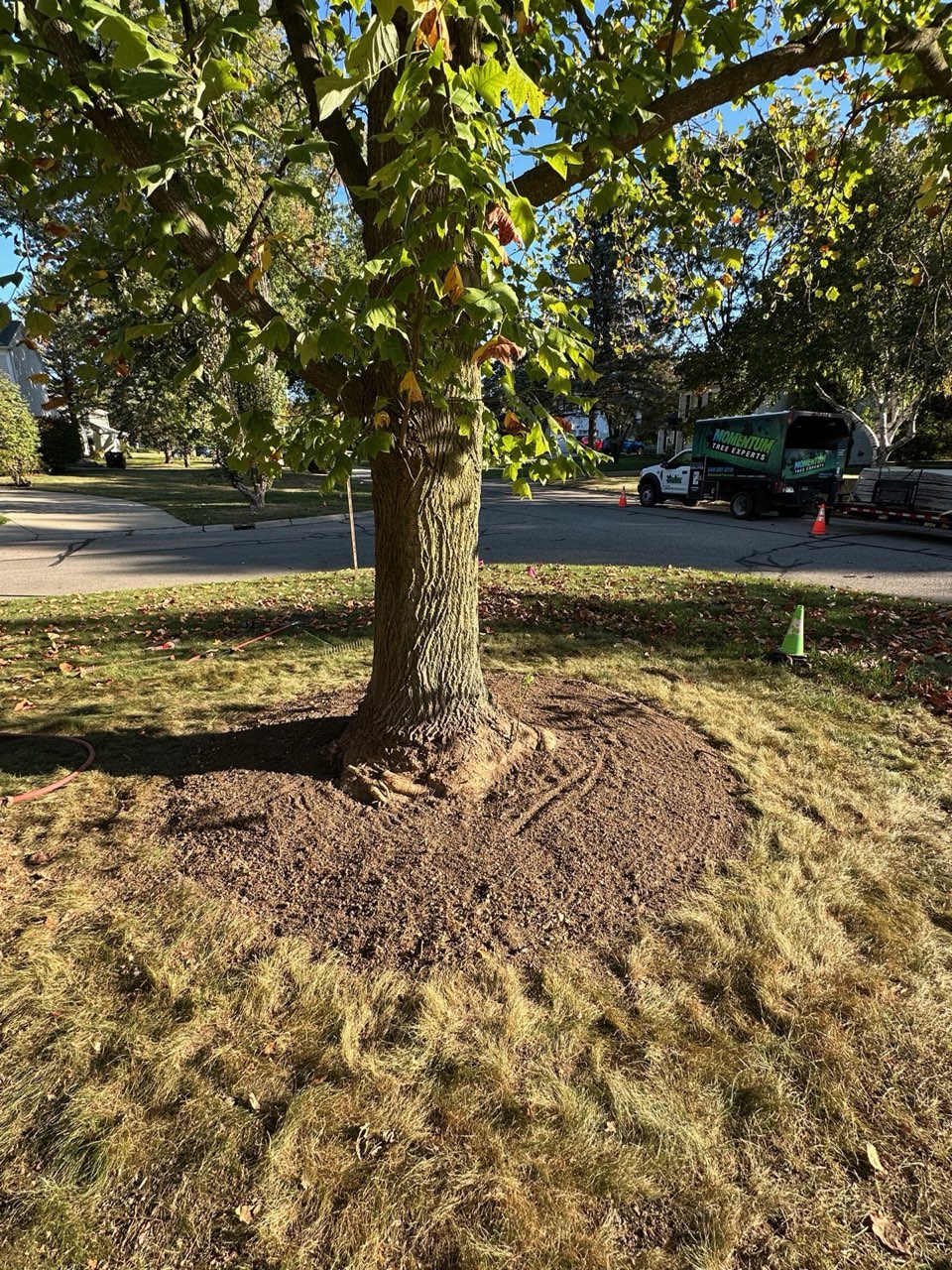
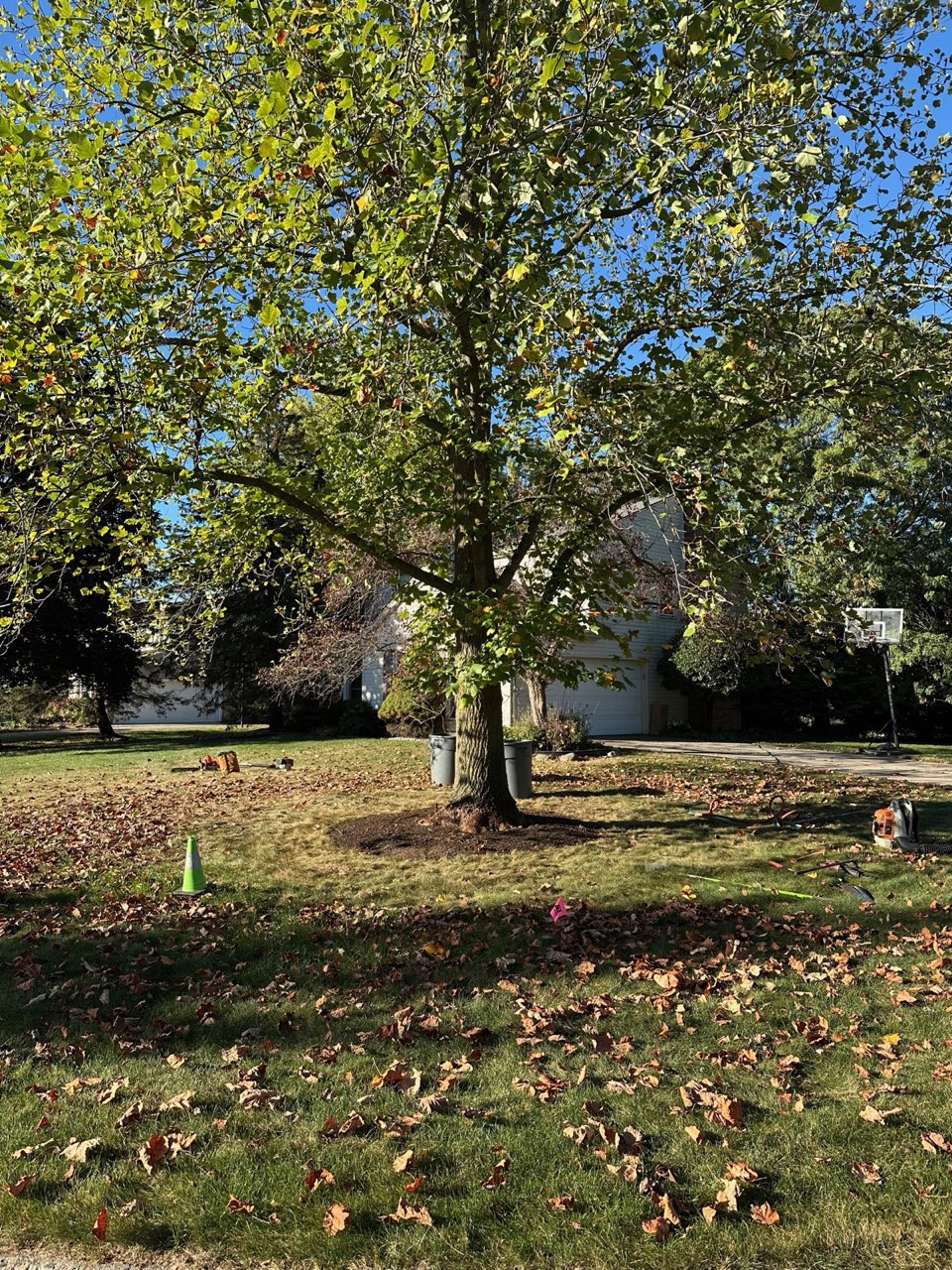
A front-yard tulip tree in Farmington Hills, Michigan received our most complete soil restoration. We cleared the turf around the trunk, opened up the compacted soil with an air spade, freed roots that were circling the trunk, rebuilt the soil, and finished with a ring of wood chip mulch.
Project Facts
- Location
- Farmington Hills, MI
- Completed
- October 2025
- Tree
- Tulip tree (Liriodendron tulipifera)
- Service
- Full soil restoration
- Root collar
- Girdling roots pruned at the base
- Finish
- Wood chip mulch ring
The Job
This front-yard tulip tree in Farmington Hills, Michigan was stressed by compacted soil and competition from the lawn. Grass grows a dense root mat right up to the trunk, and compacted soil keeps air and water from reaching the tree's roots.
Opening up the soil
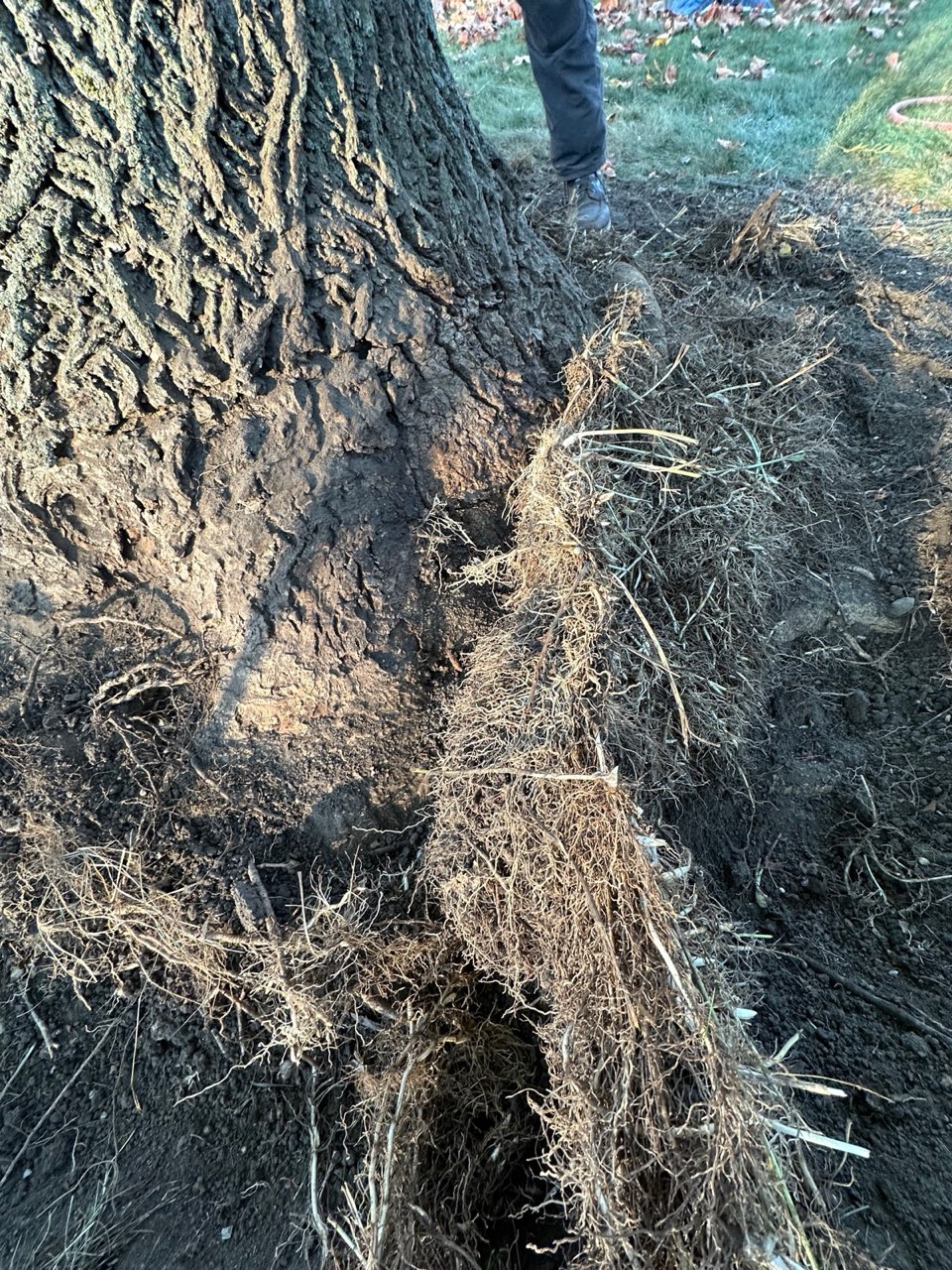
We cleared the turf around the trunk and used an air spade to loosen the compacted soil and uncover the root flare. An air spade uses compressed air, so it moves soil without cutting the roots underneath.
Girdling roots
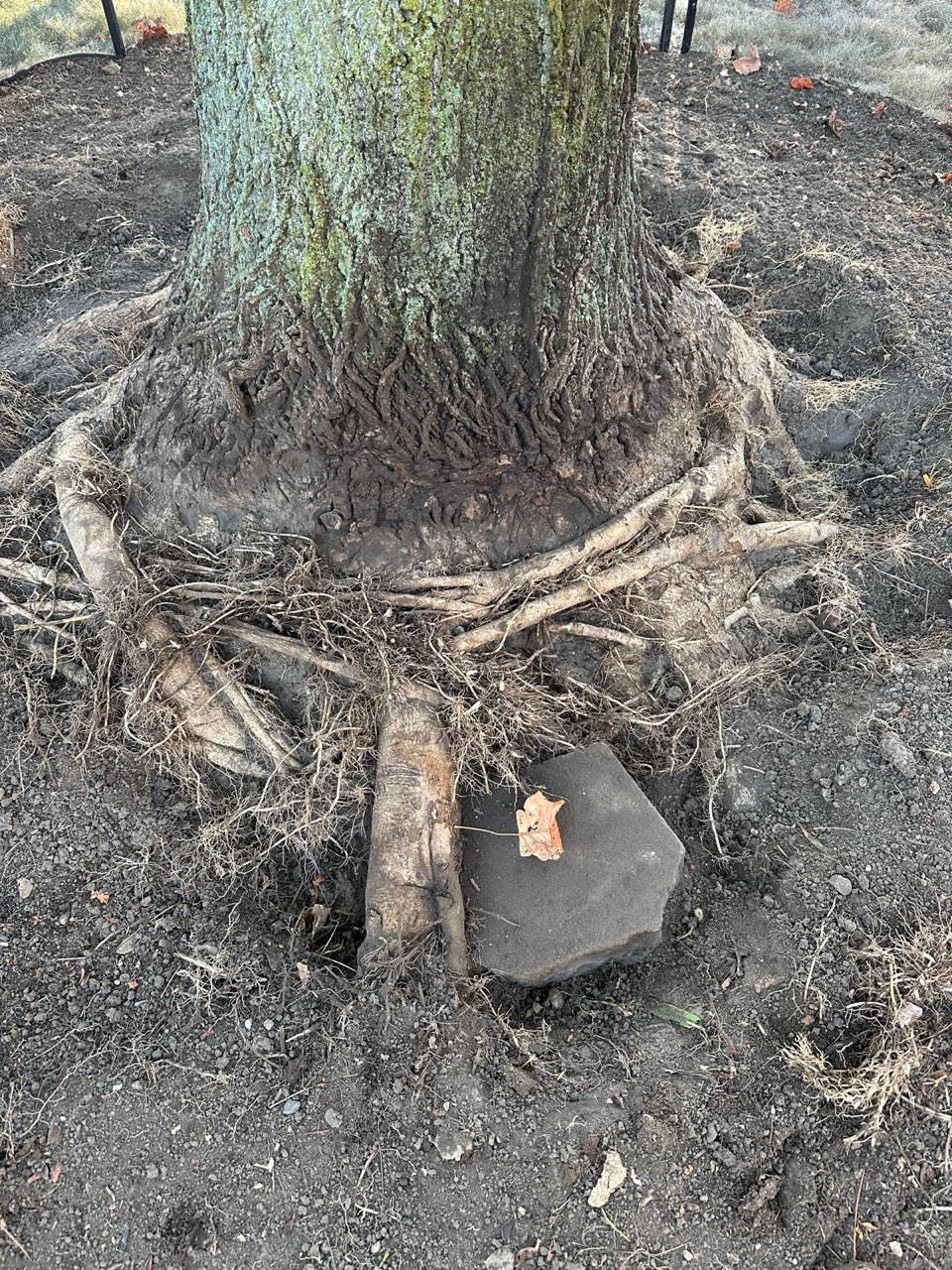
With the base uncovered, we found girdling roots, roots that wrap around the trunk instead of growing outward. Left alone, they can squeeze the tree as it grows. We pruned them so the root flare can develop properly. The before and after photos below show the difference.
We then rebuilt the soil around the roots and finished with a ring of wood chip mulch, kept back from the trunk. The mulch holds moisture, protects the soil and keeps the lawn from competing again.
Soil work is a foundation. Some improvement can show within months, but most of the benefit comes during the next growing season.
Before and After: Girdling Roots
Left: the root collar after air spading, with girdling roots around the base of the trunk. Right: the same root flare after the girdling roots were pruned, with far fewer roots crossing it.
Project Photos
Questions About This Project
When is the best time for soil restoration around a tree?
Late summer through fall (August to November) or spring (March to May), when the soil is active and the tree is putting energy into its roots.
How long until a tree shows results from soil restoration?
Results take time. Some improvement can appear within months, but most benefits show up during the following growing season.
Why remove the lawn from around a tree?
Turf grows a dense root mat that competes with the tree for water and nutrients. Replacing it with a mulch ring gives that space back to the tree's roots.
What is a girdling root?
A girdling root wraps around the base of the trunk instead of growing outward. Over time it can squeeze the trunk. Uncovering the base with an air spade makes them visible so they can be pruned.