Plant Health Care · Farmington Hills, MI
Bur Oak & Sugar Maple Care Plan
Written by Mounir Fahim, ISA Certified Arborist, Momentum Tree Experts
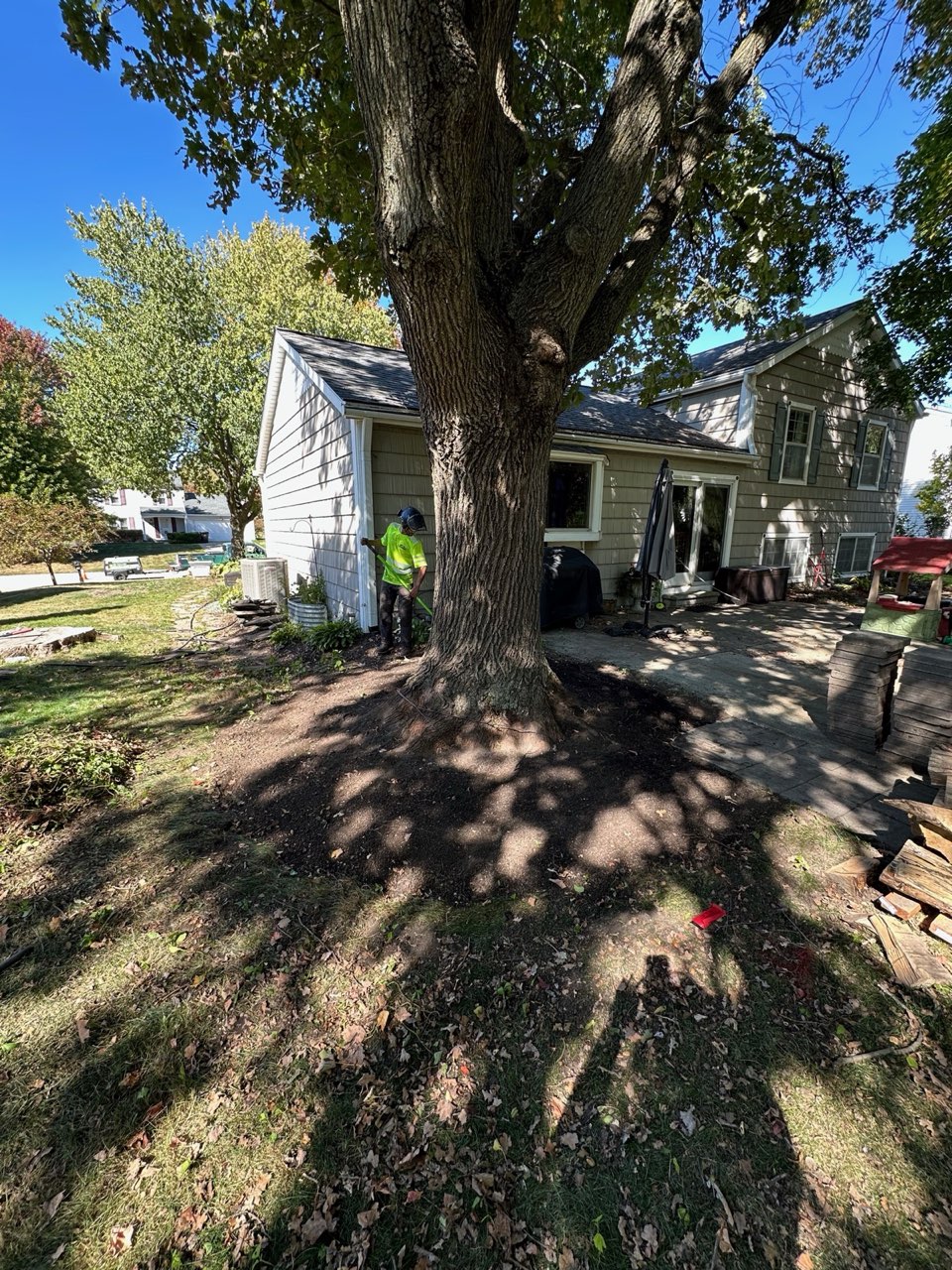
Two large trees behind a home in Farmington Hills, Michigan, a bur oak and a sugar maple, received a full care plan: soil restoration around both, pruning to bring limbs back from the roof and remove large deadwood, and a synthetic cabling system to support the maple's three stems.
Project Facts
- Location
- Farmington Hills, MI
- Completed
- October 2025
- Trees
- Large bur oak and large sugar maple behind the home
- Service
- Soil restoration, safety pruning and cabling
- Cabling
- Synthetic system supporting the maple’s three stems
The Job
The homeowners had two large trees in the backyard, a bur oak and a sugar maple, and they'd noticed the oak's leaves looking discolored and dusty.
Soil restoration
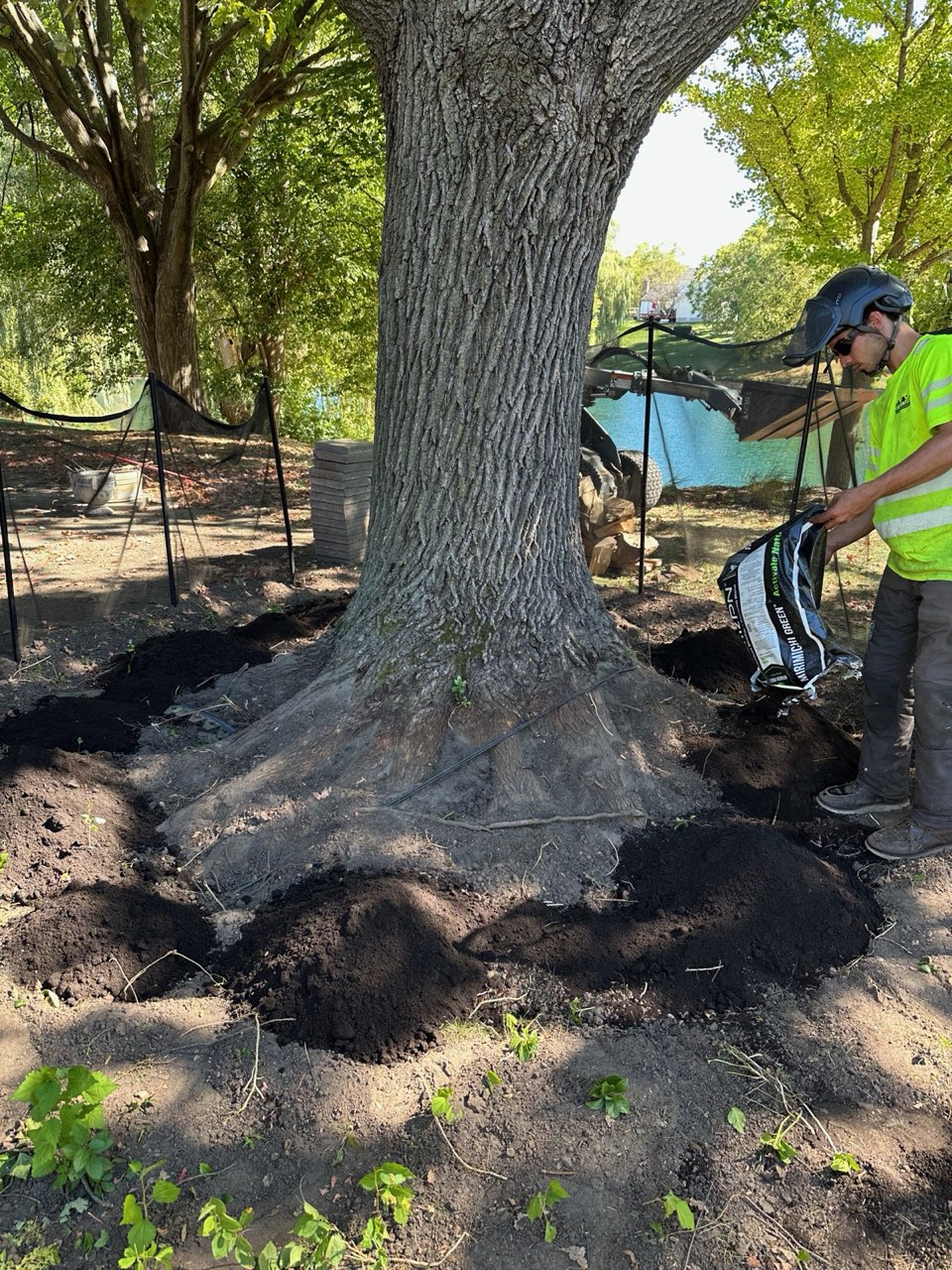
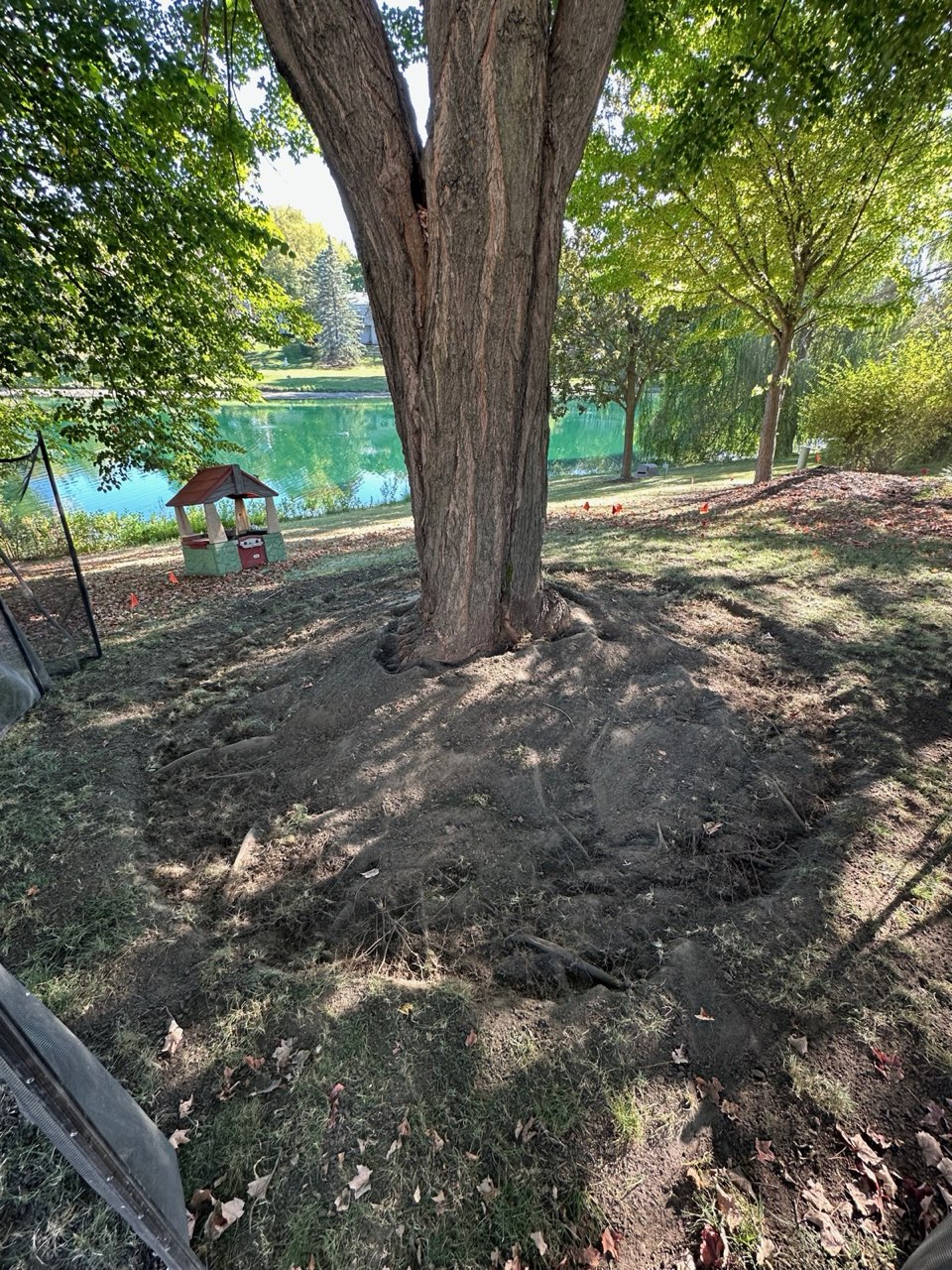
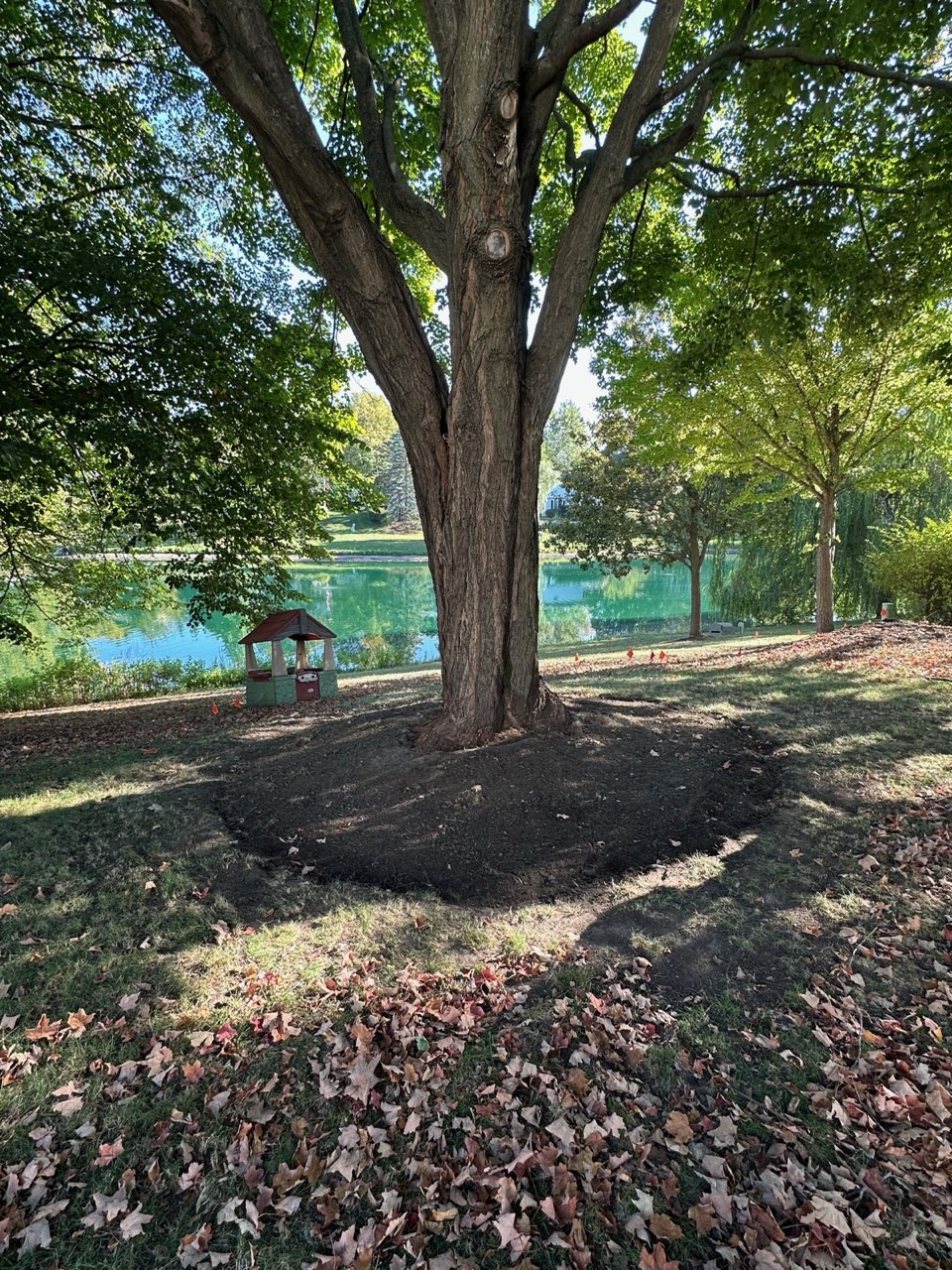
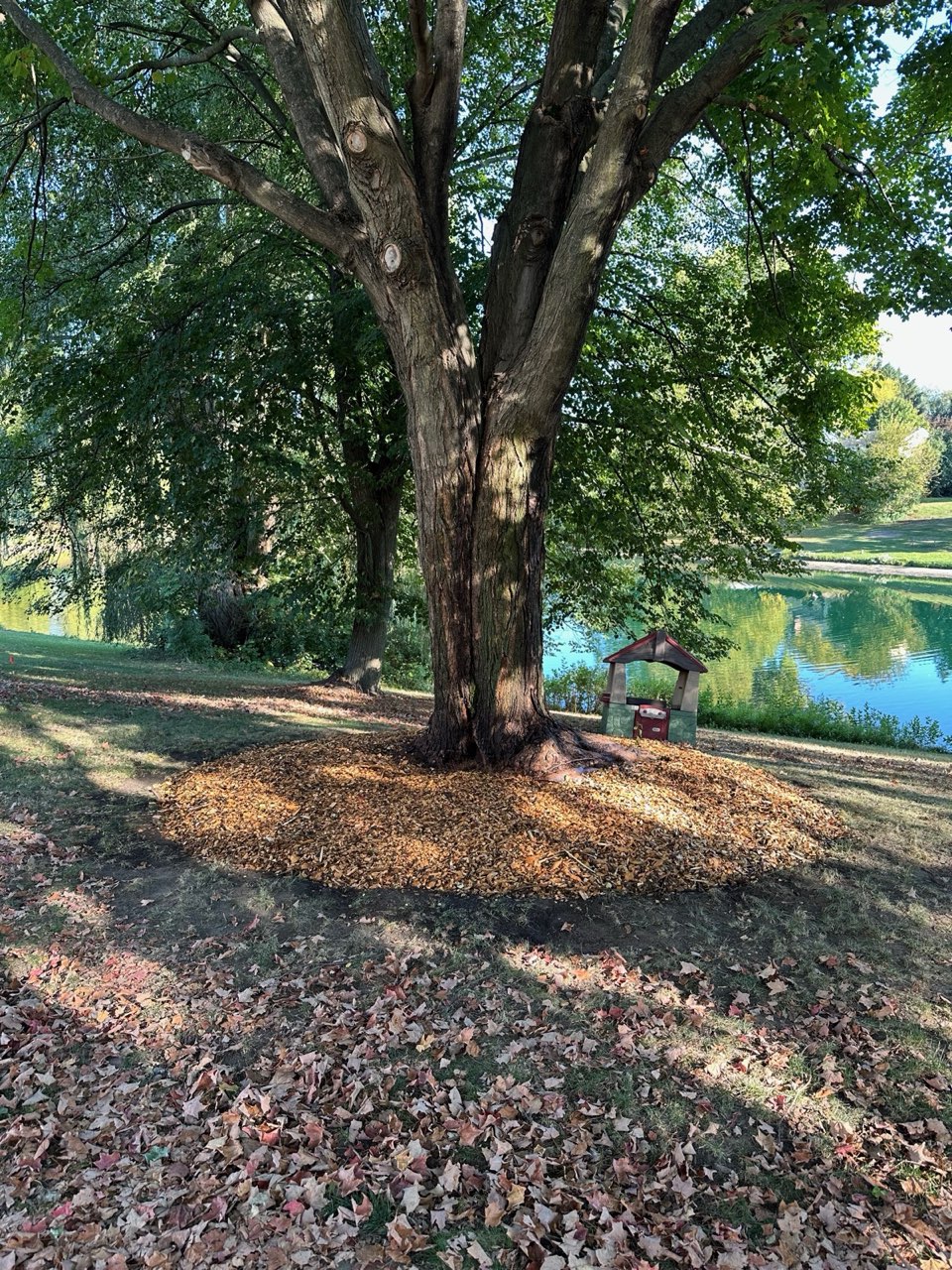
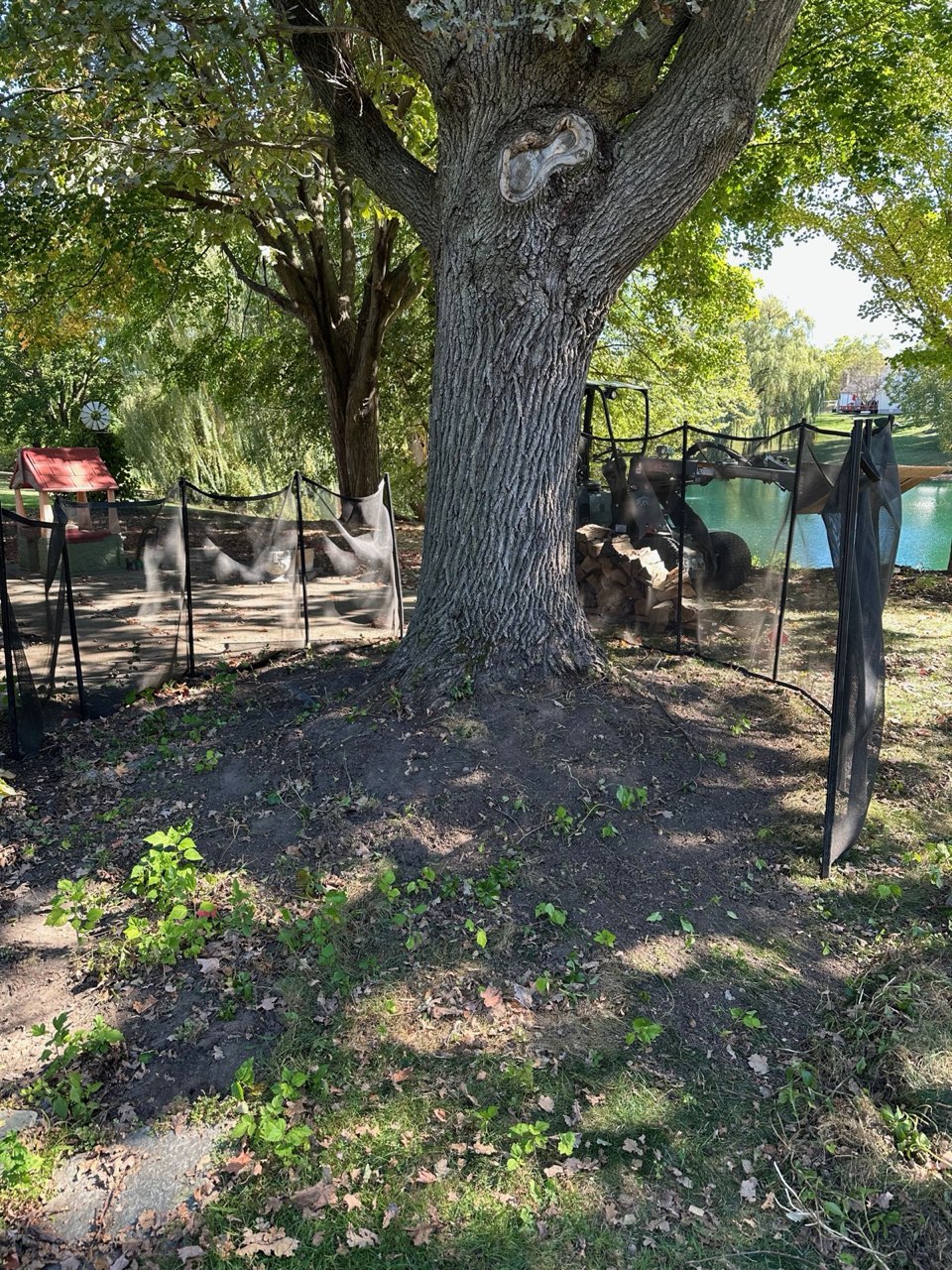
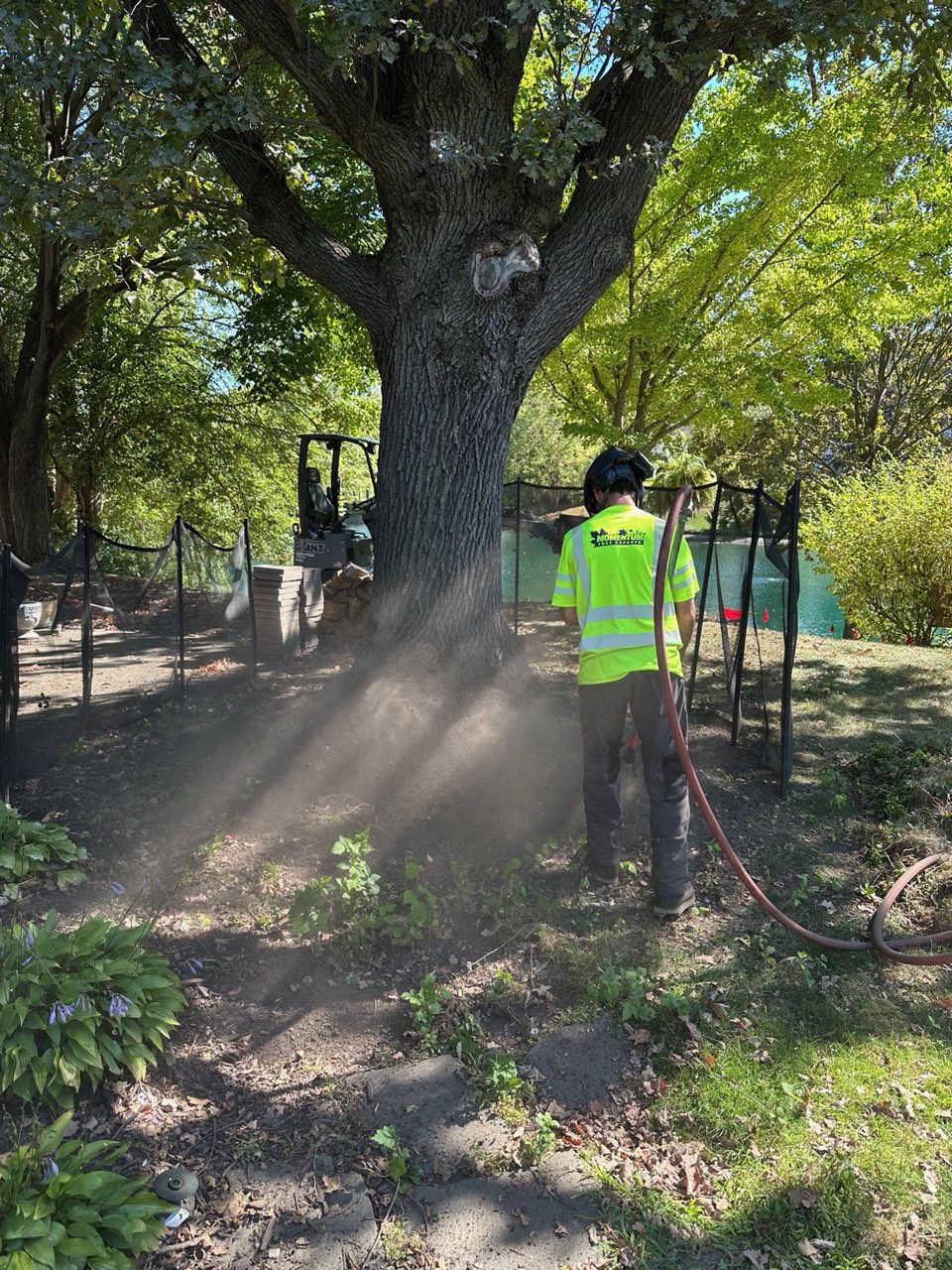
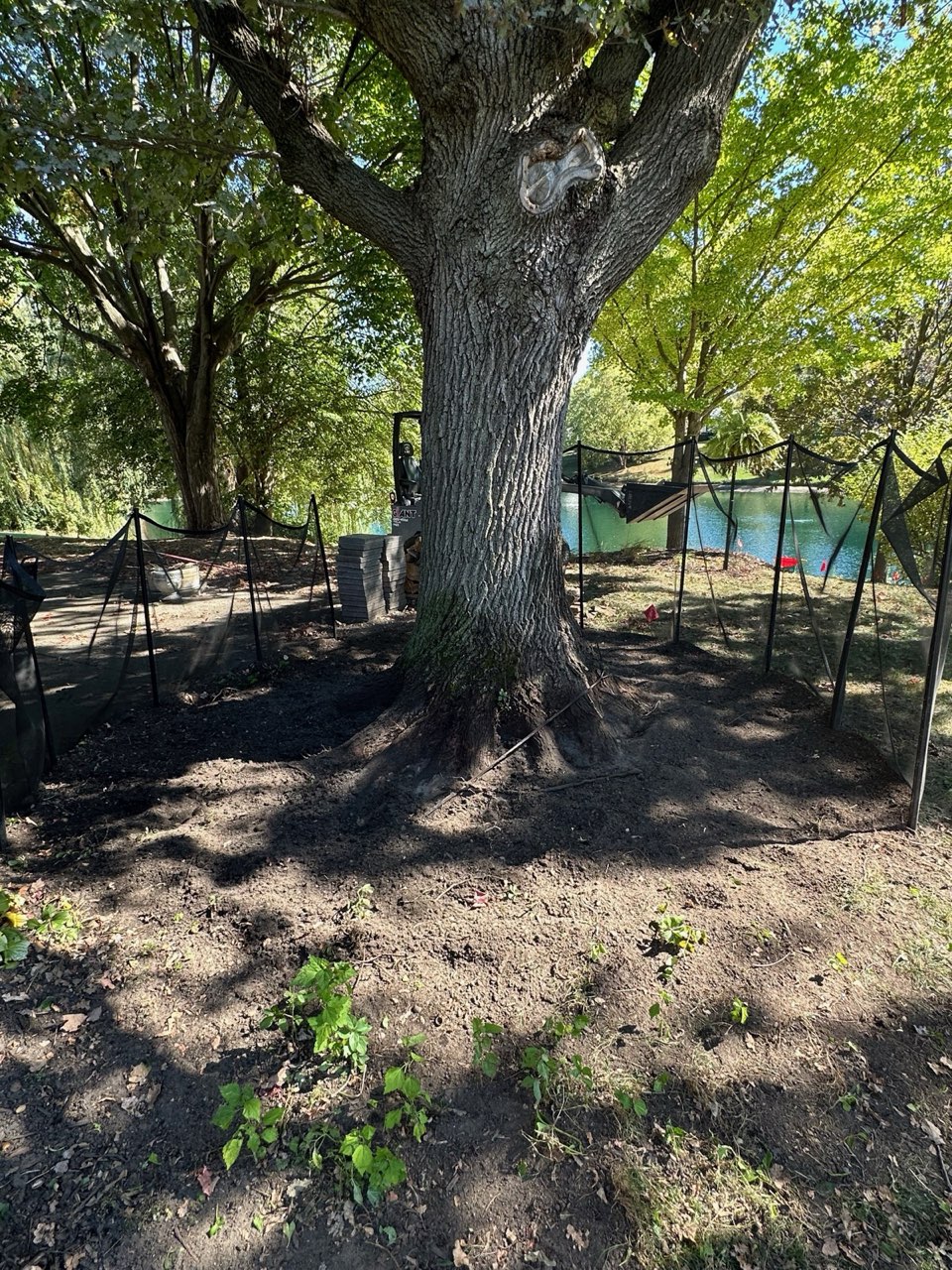
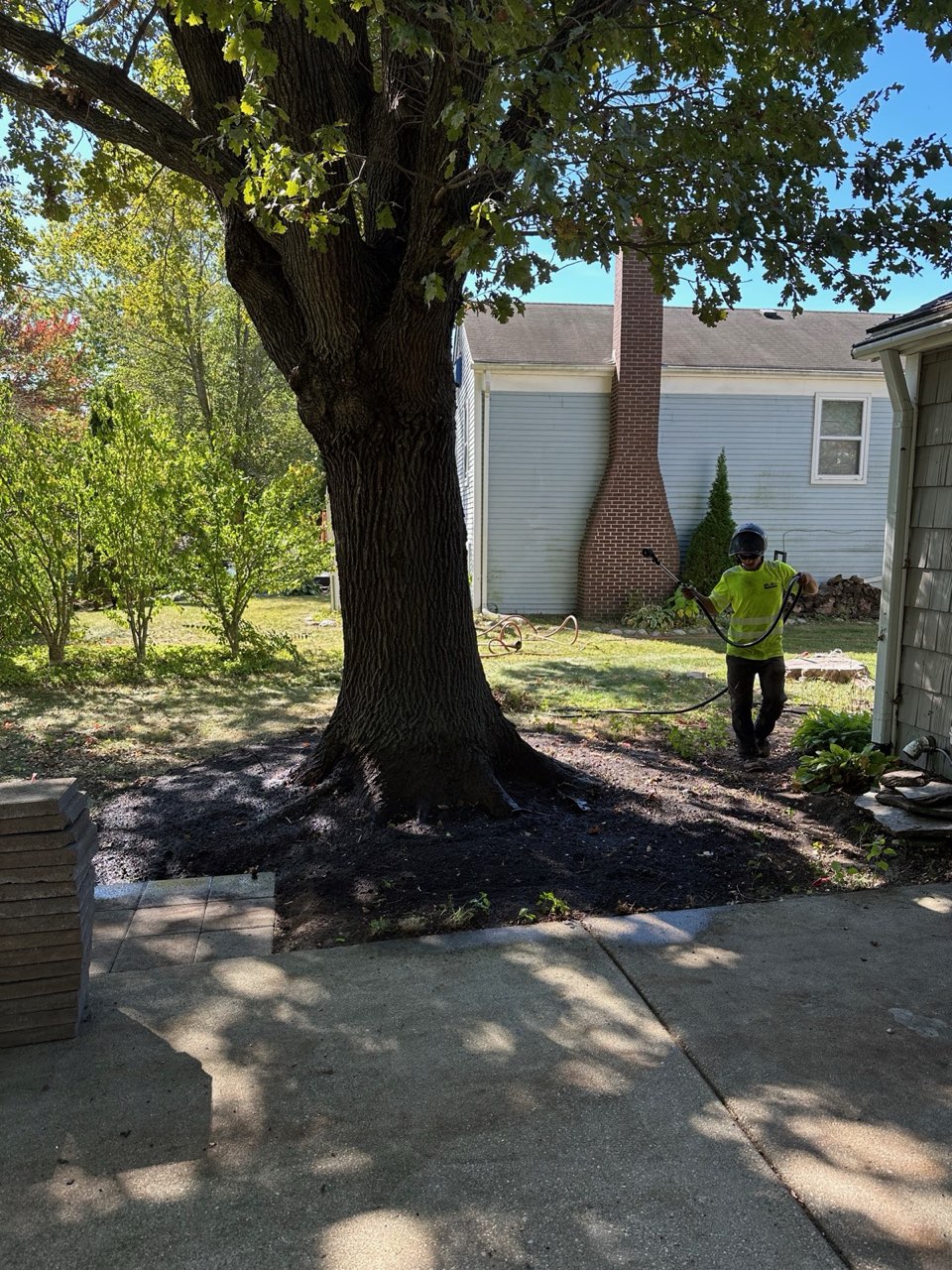
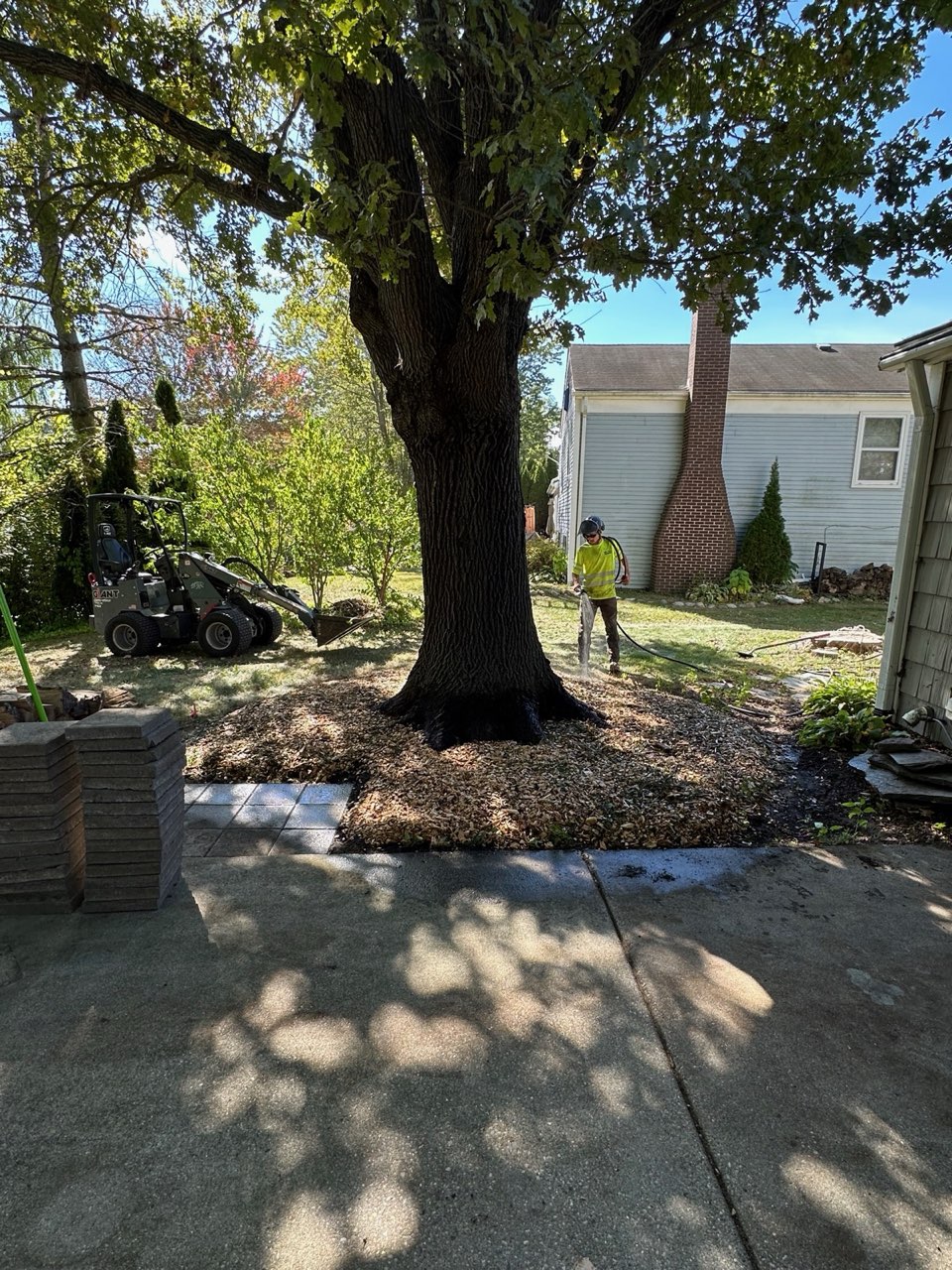
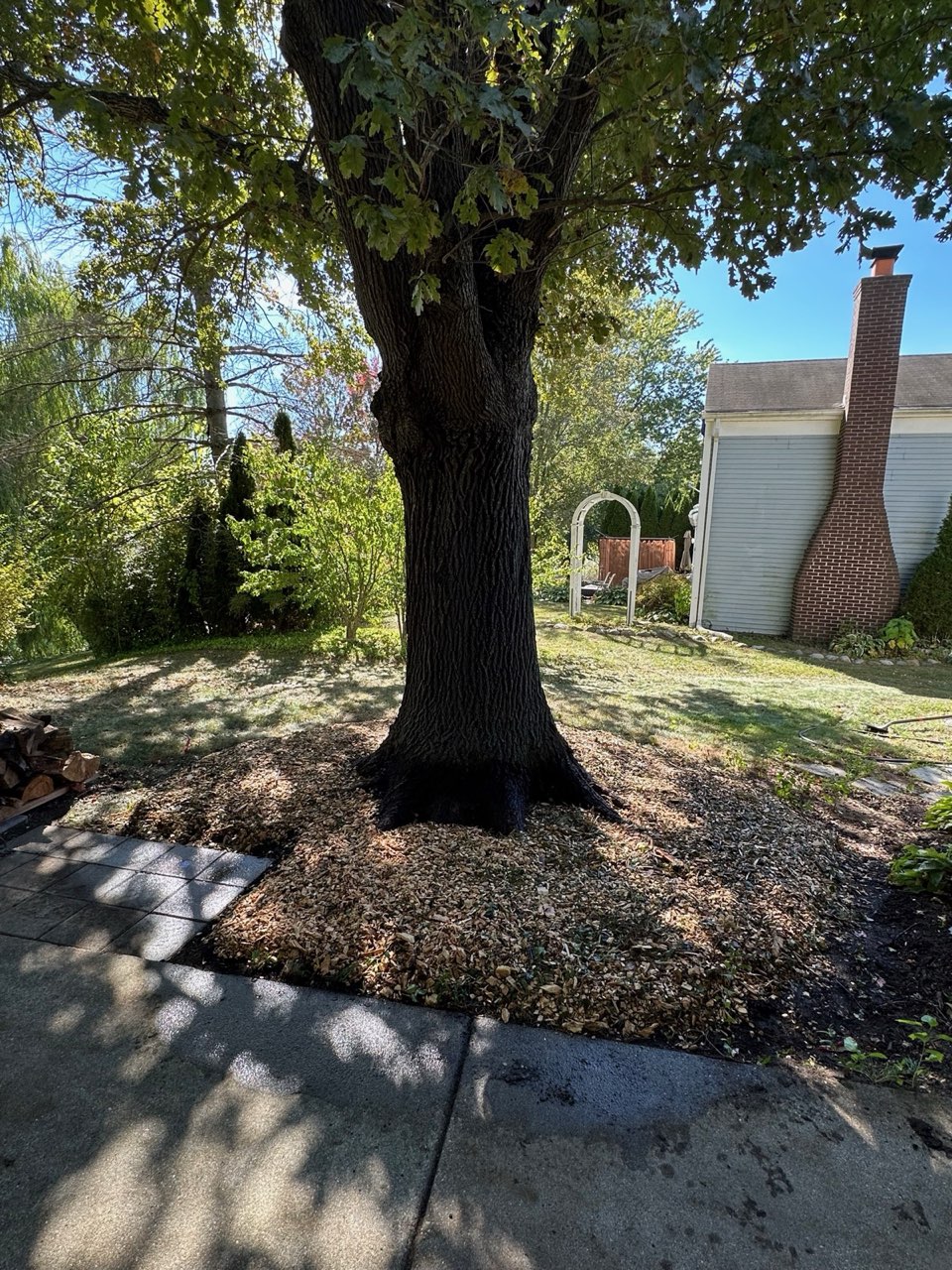
Both trees received soil restoration. The crew loosened the compacted soil around each trunk with an air spade, improved it, and finished with mulch to protect the roots and hold moisture. The area looks fresh right away, and the benefits to the soil build over the next few seasons.
Pruning for safety
Our main concerns were large limbs over the roof and some large dead limbs. On the bur oak, we brought the limbs over the roof back and removed the large deadwood. The homeowners were happy to keep those limbs as long as they were low risk, and that's what we set up. On the sugar maple, we lightened the large stem that reaches over the home, which lowers the load on it in storms.
Cabling the sugar maple
The maple has three large stems with included bark where they join, so we installed a cabling system to support all three. We chose synthetic cabling so the tree keeps moving naturally, which helps it keep building strength. No support system can promise a tree will never fail, so it should be checked every year or two.
Project Photos
Questions About This Project
Why use synthetic cabling instead of steel?
Synthetic cabling lets the tree keep moving naturally, which helps it keep building strength, and it can be adjusted over time.
How does cabling support a tree with three stems?
The system connects the three stems so each one is supported by the others, which helps protect the weak spots where they join.
How often should a tree cabling system be inspected?
Every year, or every two years at most. Systems eventually need to be replaced as the tree grows and the materials age.