Tree Cabling · Orchard Lake Village, MI
Magnolia Cabling & Maple Pruning
Written by Mounir Fahim, ISA Certified Arborist, Momentum Tree Experts
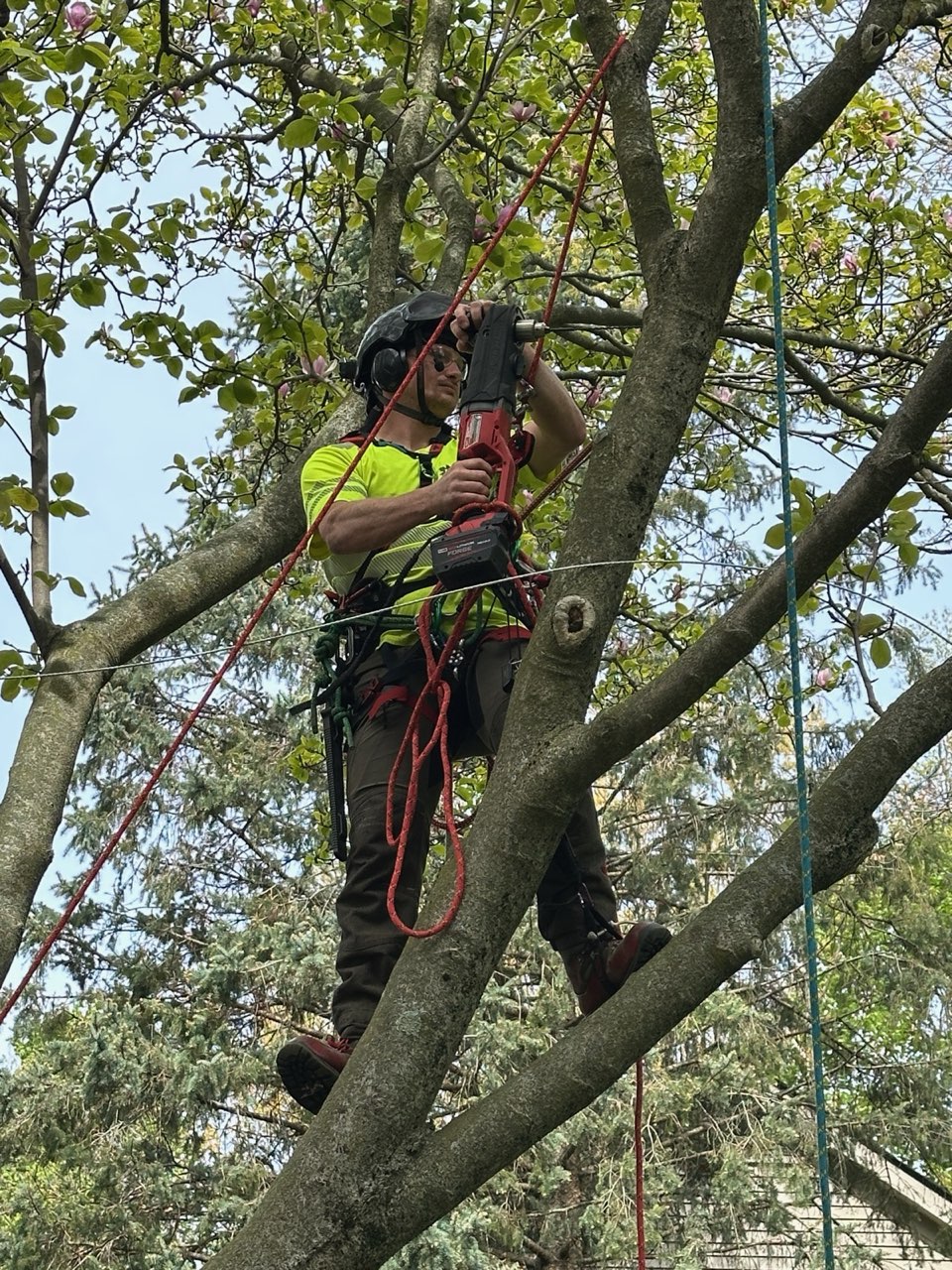
At a home in Orchard Lake Village, Michigan, a magnolia with a weak, included-bark union at its base received a steel cabling system chosen to stay nearly invisible, and a mature sugar maple was pruned back from the roof. The goal was a safer, cleaner yard with little to worry about for years.
Project Facts
- Location
- Orchard Lake Village, MI
- Completed
- May 2026
- Trees
- Magnolia and mature sugar maple
- Magnolia
- Steel cabling system to support a weak union at the base
- Sugar maple
- Pruned back from the roof
- Method
- Climbed
The Job
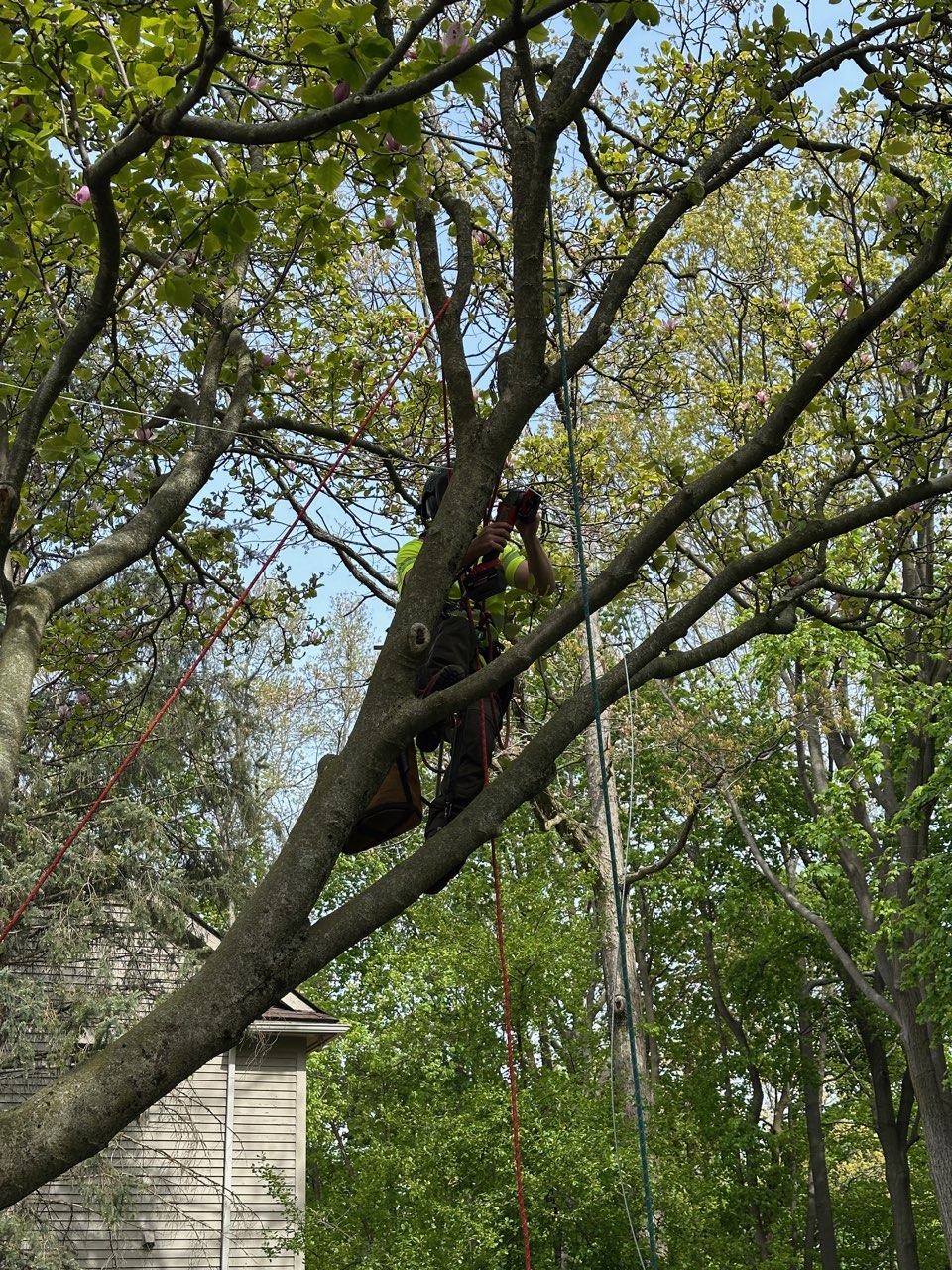
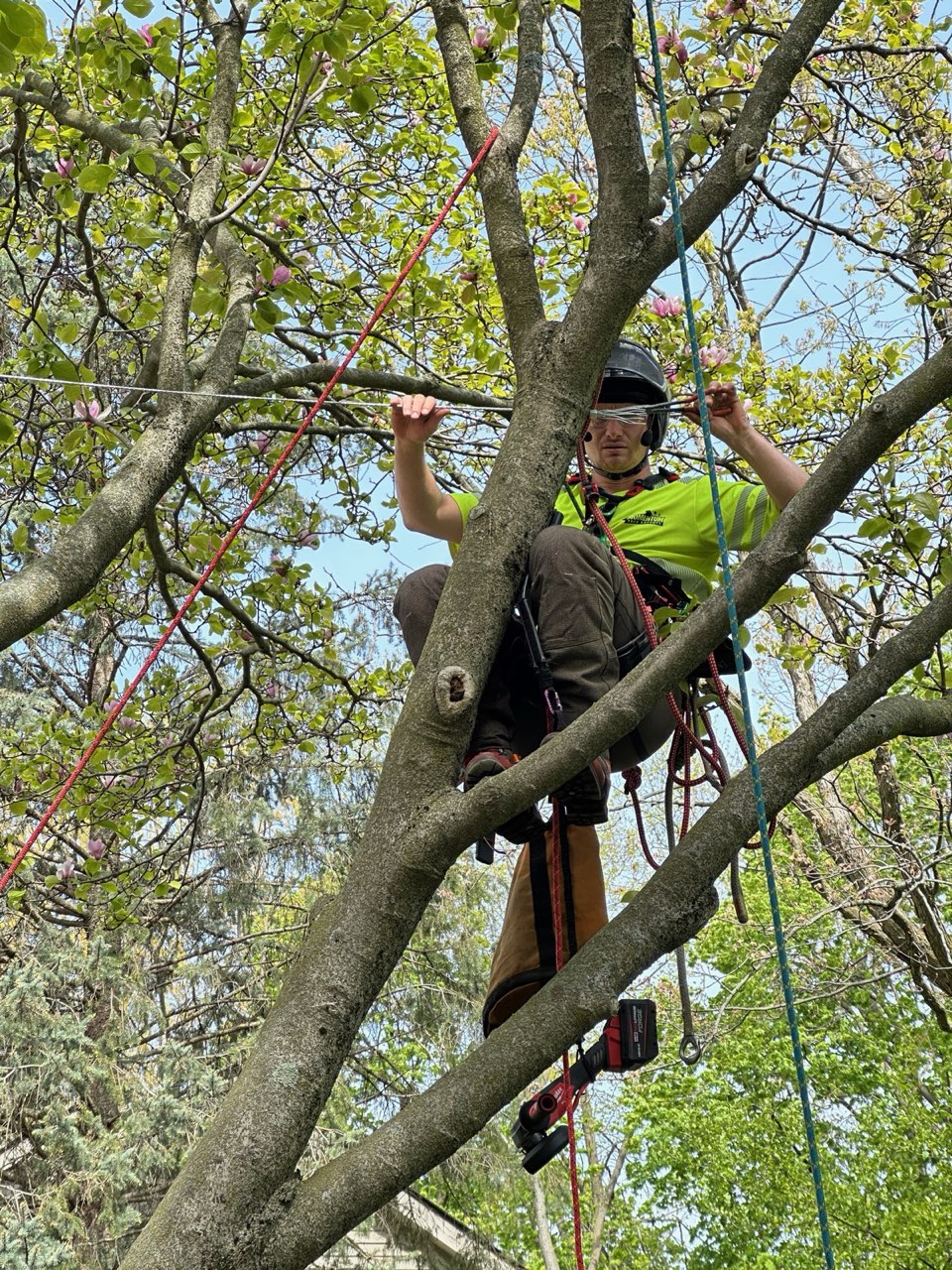
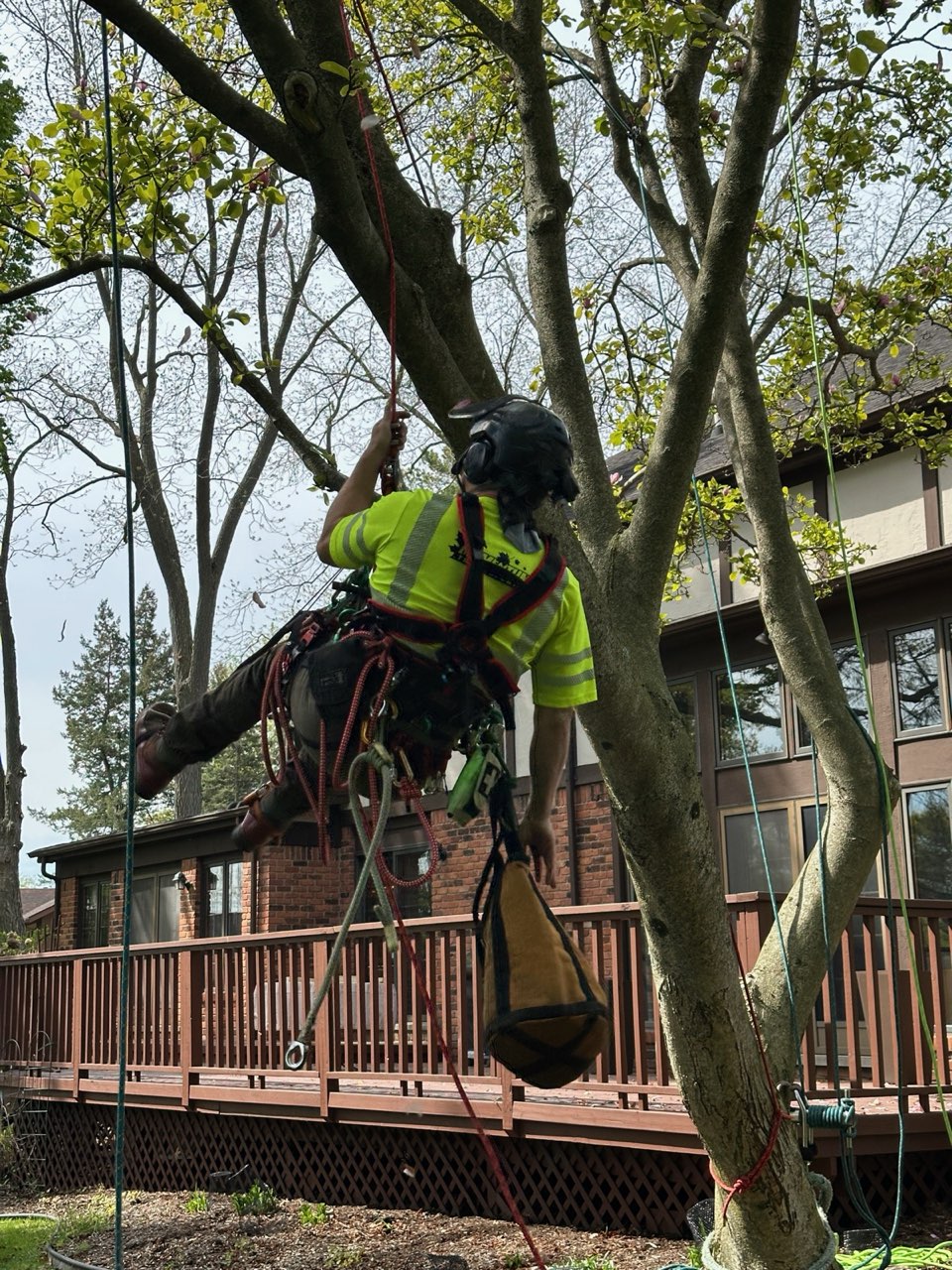
The magnolia beside this home's back deck had a weak spot at its base: two stems growing tightly together with bark trapped between them, called an included-bark union. That kind of union is weaker than a normal attachment, so we recommended a cabling system to support it.
A cabling choice made together
We usually prefer a dynamic (synthetic) system, which lets the tree move and keep building its own strength. These homeowners did not want to see the cabling in their magnolia. After we went over the trade-offs together, they chose a steel (static) system, which is far less visible but holds the stems more rigidly. It was their call to make, and the magnolia now has support where it needs it most.
Sugar maple near the roof
A mature sugar maple at the back corner of the home had grown toward and over the roof. We pruned it back to give the house clearance while keeping the tree's natural shape.
As always, we hauled everything away and left the yard clean.
Project Photos
Questions About This Project
What is the difference between a static and a dynamic cabling system?
A static system uses steel cable and holds the stems rigidly. A dynamic system uses synthetic rope that lets the tree move and keep building strength. We usually recommend dynamic, but steel is far less visible, which is why these homeowners chose it for their magnolia.
What is an included-bark union?
It is a spot where two stems grow tightly together with bark trapped between them. The bark keeps the wood from fusing, so the union is weaker than a normal attachment. Cabling adds support at that weak point.
Can a tree be pruned away from a roof without hurting it?
Yes. Pruning back limbs that reach toward or over a roof, done with proper cuts, gives the house clearance while keeping the tree healthy and natural looking.