Tree Services
Mechanized Tree Removal and the Feedback Loop Reshaping Our Communities
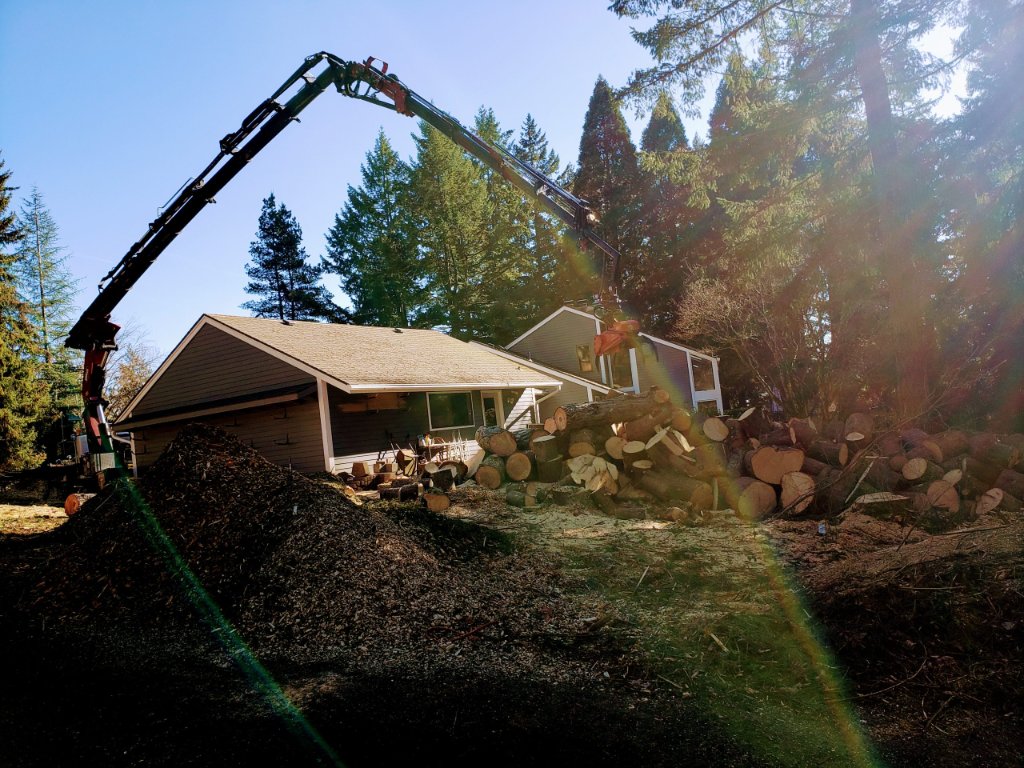
Understanding the Economics Behind Tree Removal
Why are trees being removed faster than they're being planted across America? It's a question worth understanding—not to point fingers, but to make better decisions about your own property and neighborhood.
The answer lies in how tree care economics actually work.
The Business Model Shapes the Options
A tree removal company typically invests $400,000 to $1,000,000 in equipment—bucket trucks, chippers, stump grinders. These are substantial, fixed costs that don't change whether the equipment is used 50 days a year or 250 days.
To make that investment work financially, that equipment needs to be used regularly. It's straightforward business logic: the higher the equipment utilization, the better the return on investment.
This creates an important dynamic to understand: the business model naturally favors work that uses expensive equipment efficiently.
Now compare two types of work:
- Tree removal: Hours of work, then complete. Equipment gets used intensively, then the job is done.
- Tree restoration: Soil improvement, ongoing care, monitoring. Smaller individual projects spread over months or years.
One fits the equipment-heavy model better than the other. This isn't about intention—it's about how the economics naturally flow.
This isn't conspiracy. It's how incentive structures work. When the economics reward removal at every node, removal accelerates regardless of individual intentions.
How Market Pressures Evolve
When multiple companies invest in similar equipment and compete for work, prices naturally adjust downward. Removal becomes more affordable. At the same time, the time-intensive work of preservation requires skilled labor over longer periods, keeping those costs higher.
From a homeowner's perspective, the price difference is real and meaningful. But what's less visible is what gets lost in that choice.
The Hidden Costs of Removal
When a tree is removed, several valuable benefits disappear with it:
To your property:
- Property value typically drops by 10–15% for each large mature tree removed
- Shade is gone, increasing cooling costs (mature trees typically reduce cooling costs by 15–35%)
- Roots that managed stormwater are gone, increasing runoff and foundation risk
To your neighborhood:
- Air quality benefits vanish (urban forests provide $12.9 billion annually in air pollution removal value across the US)
- Stormwater management decreases (mature tree canopies intercept up to 59% of annual rainfall)
- Wildlife habitat is lost (a single mature oak supports 500+ species)
- Community character shifts
To the broader picture:
- Carbon that was stored in that tree is released
- It takes 80–120 years for a new tree to replace that carbon storage
- The structural complexity trees develop over decades—hollows, root networks, the complexity that creates real habitat—takes centuries to develop
The Pattern That Emerges
When you step back and look at the numbers, a pattern becomes visible:
- 36 million urban trees are lost annually in the US (USDA Forest Service)
- We plant about 5 billion trees globally per year, but remove 15 billion—a 3-to-1 loss ratio
- One in three newly planted trees dies within 5 years in urban settings
- Large, mature trees—the most valuable ecologically—are disappearing fastest (projected 87% decline over 300 years in some regions)
This isn't a conspiracy or anyone's deliberate plan. It's a pattern that emerges when economic incentives align toward one choice and away from another.
Your Real Pain Points vs. Your Real Goal
Before making any tree decision, let's be honest about what you're actually trying to solve:
What's really bothering you:
- The tree looks unhealthy or dying
- There are dead branches that concern you (is it unsafe?)
- You're worried about property damage or falling limbs
- It's costing money to maintain, and you're not sure why
- A contractor said it "needs to come down"
What you actually want:
- A safe, healthy tree that looks vibrant
- Shade and cooling in summer
- The property value to stay strong or improve
- Stormwater managed naturally
- Peace of mind that you made the right call
- To not have wasted money on something that wasn't necessary
Here's the disconnect: removal solves the immediate problem (take the tree down) but sacrifices everything you actually want (shade, property value, peace of mind long-term).
Preservation and restoration, by contrast, addresses the root cause and gets you to your actual goal—but it requires a proper diagnosis first.
That's the crucial difference: one is fast and removes the problem. The other is slower but solves the actual problem.
What Matters for Your Decision
Understanding these economics doesn't mean tree companies are wrong or bad. Many are run by thoughtful, knowledgeable professionals who genuinely care about trees. But the underlying incentive structure matters when you're making decisions about your own property.
Here's what we suggest asking before making any removal decision:
Is this a true necessity? Does the tree pose a genuine safety risk? Is it failing structurally, or is it struggling in compacted soil that could be restored? These are different problems with different solutions.
What would restoration look like? A declining tree often isn't dying—it's stressed. Soil work, proper drainage, and time can bring vitality back. This is slower, less visible, but the long-term payoff is substantial.
What's the full cost comparison? Don't just compare removal price to restoration price. Factor in the property value loss, the cooling costs, the 80–120 years it takes to get back what you had.
Moving Toward Better Choices
The good news is that as more property owners understand these trade-offs, better decisions happen. Trees get preserved. Neighborhoods stay healthier. Property values hold.
It starts with asking better questions before making decisions that, once made, can't be undone.
Your trees are worth that conversation.
A Better Path Forward
The future isn't written yet. Every tree we choose to preserve instead of remove is a vote for something bigger—cleaner air, cooler neighborhoods, wildlife habitat, carbon storage, and homes that are worth more and feel better to live in.
The economics of removal are real. But so are the economics of preservation. A mature oak adds $10,000–$76,000 to property value. A healthy canopy reduces energy costs by 15–35%. A tree's shade and root system prevent flooding and reduce urban heat island effect year after year.
We choose to fight for preservation because the science is clear, the value is real, and the future depends on it. Not every tree can be saved. But most can. And the ones that can—deserve to be.
The green future isn't coming unless we choose it. One tree at a time.
Tree Care in These Areas
Ready to address your tree care needs?
Free options available