Tree Trimming · Canton, MI
Mature Maple Trimming
Written by Mounir Fahim, ISA Certified Arborist, Momentum Tree Experts
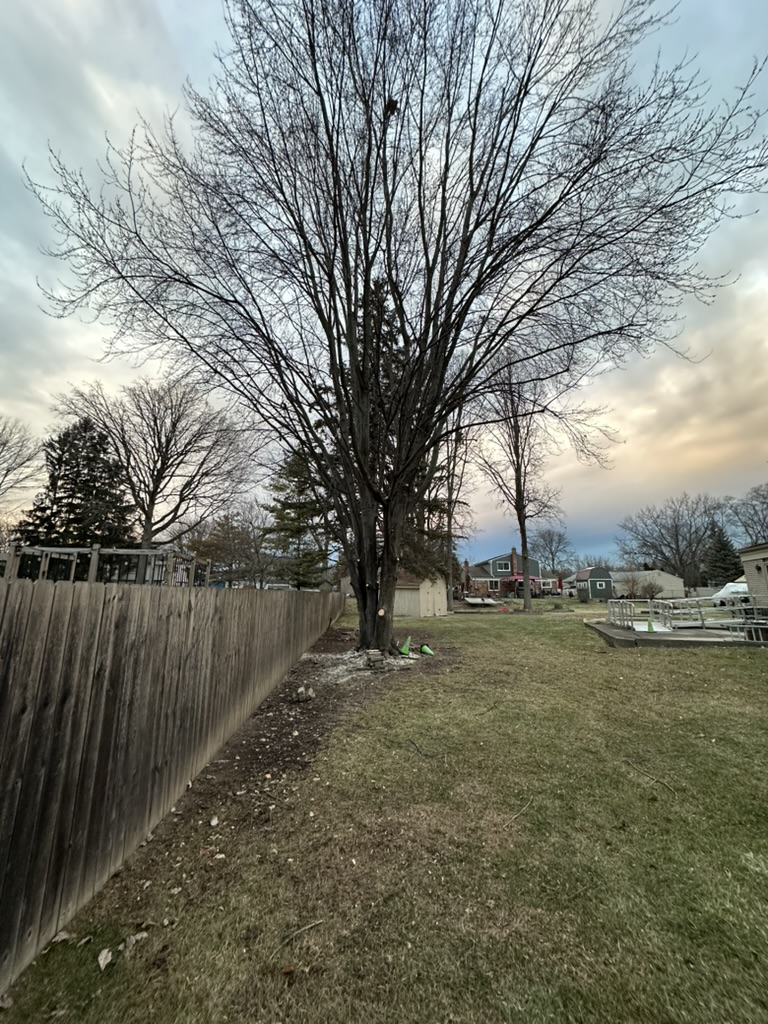
A mature maple in Canton, Michigan had never been seriously trimmed and had grown over a neighbor's fence and pool. We trimmed the lower canopy to clear the neighbor's side and did structural reduction on the limbs reaching toward the client's home, with every cut weighed against what it costs the tree.
Project Facts
- Location
- Canton, MI
- Completed
- December 2025
- Tree
- Maple
- Service
- Lower canopy trimming for neighbor clearance, structural reduction toward the home
- Problem
- Large low branches over the neighbor's fence and pool
The Job
This mature maple in Canton, Michigan had never been seriously trimmed. Its large, low branches had grown over the neighbor's fence and pool, and limbs were reaching toward the client's home. The client wanted the neighbor's side cleared and the tree brought back.
Trimming and structure are different goals
Trimming is usually about clearance and appearance, not the tree's structure. That often means removing more branches, or larger ones, than we would if the tree's long-term health were the only goal. Large cuts and removal cuts are never ideal. Every one costs the tree something, and it deserves serious thought before it's made.
What we did
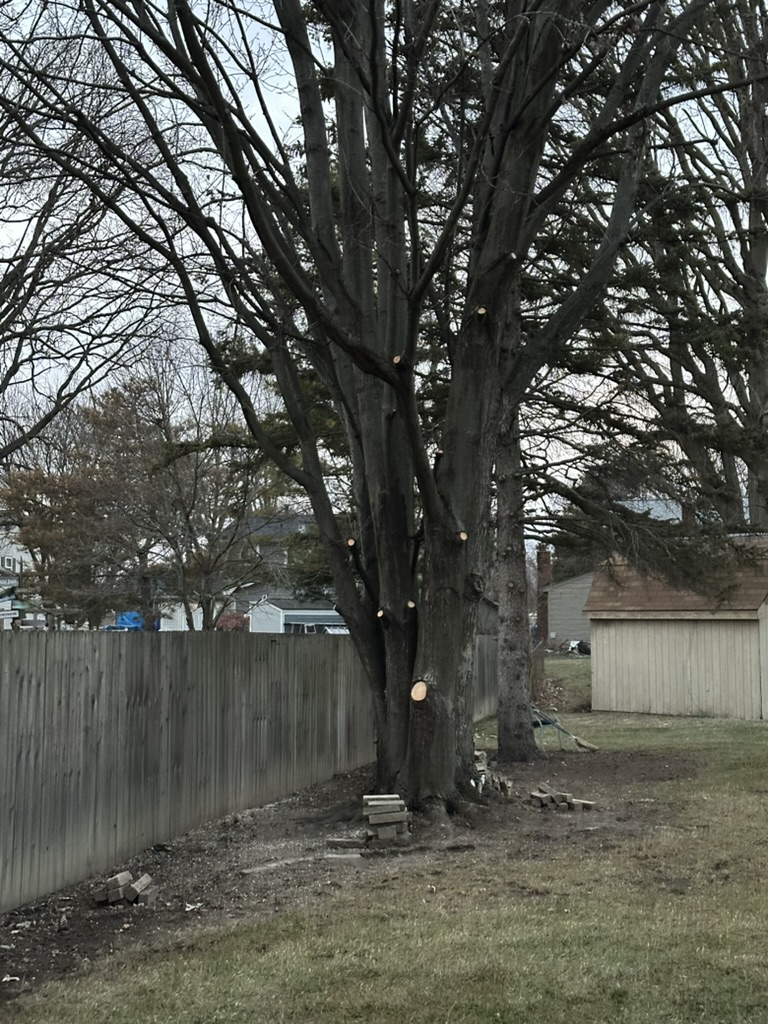
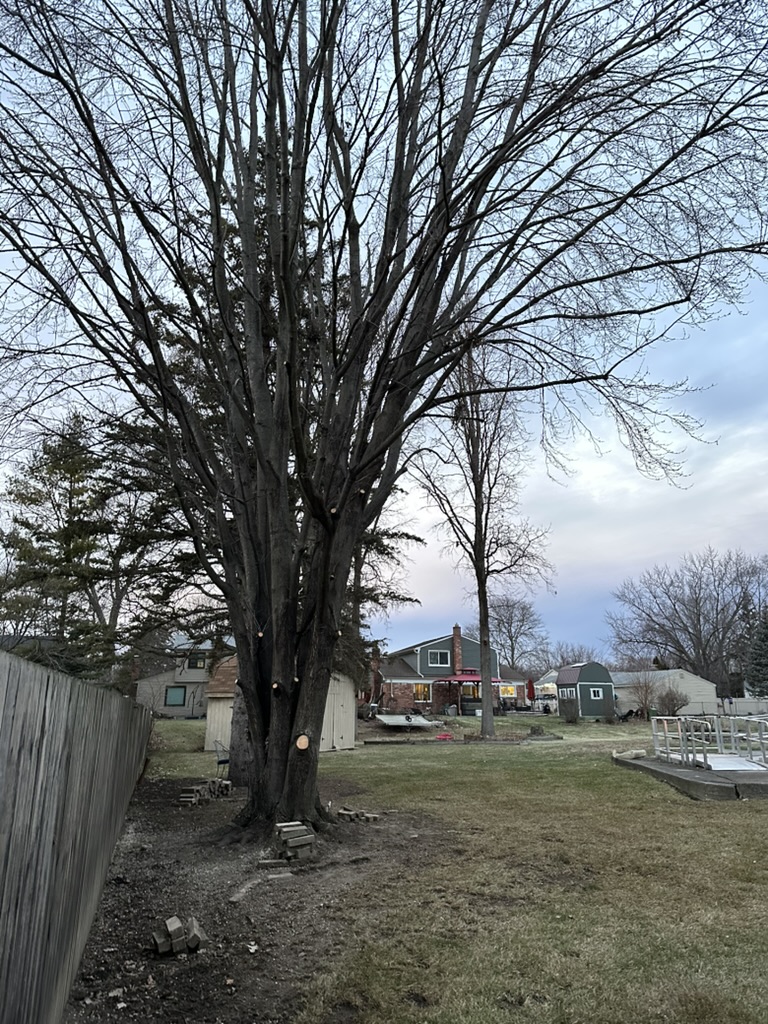
We trimmed the lower canopy to clear the neighbor's fence and pool. On the limbs reaching toward the client's home, we did structural reduction, shortening them to lower their weight and the risk they pose to the house rather than taking them off entirely.
The canopy is smaller, the neighbor's side is clear, the house has less weight over it, and the maple still looks natural and well balanced.
Project Photos
Questions About This Project
What is the difference between tree trimming and pruning?
Trimming is usually about clearance and appearance, such as clearing a neighbor's yard. Pruning for structure is about the tree's long-term health and strength. Trimming often calls for more or larger cuts than the tree would ideally want.
Are large pruning cuts bad for a tree?
Large cuts and removal cuts are never ideal. Each one leaves a wound the tree has to deal with, so they should only be made after careful thought about what they cost the tree.
What is structural reduction?
It shortens a limb instead of removing it, lowering its weight and the risk it poses while keeping more of the tree intact.