Dead Wooding · Ann Arbor, MI
Large Oak Dead Wooding
Written by Mounir Fahim, ISA Certified Arborist, Momentum Tree Experts
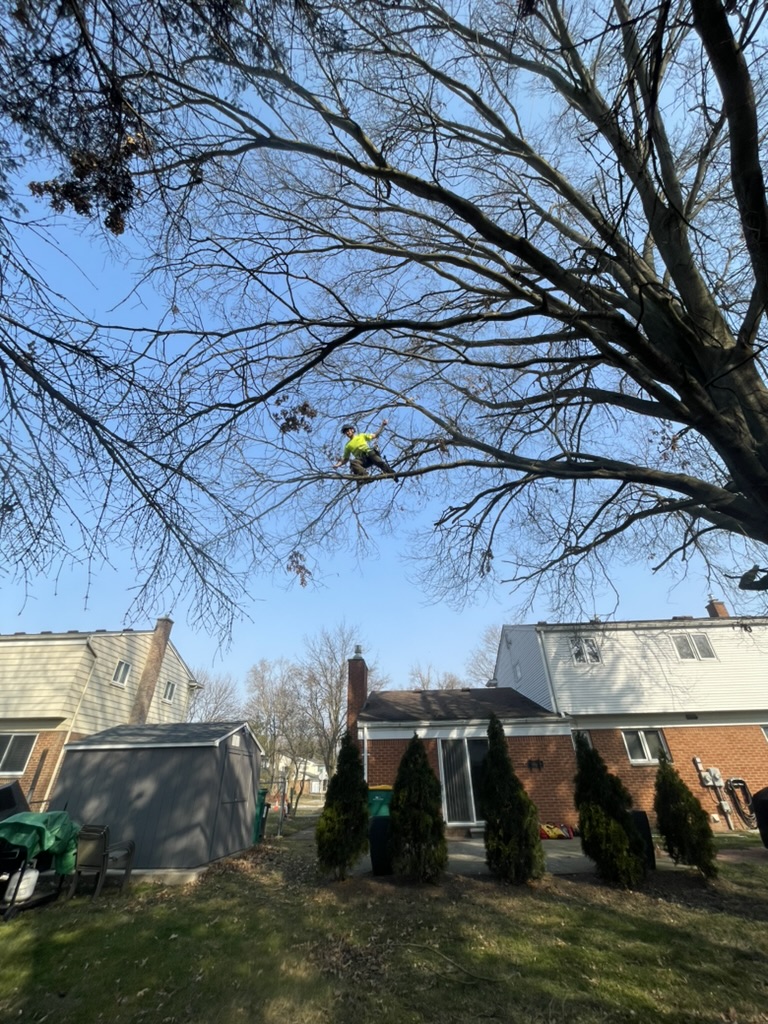
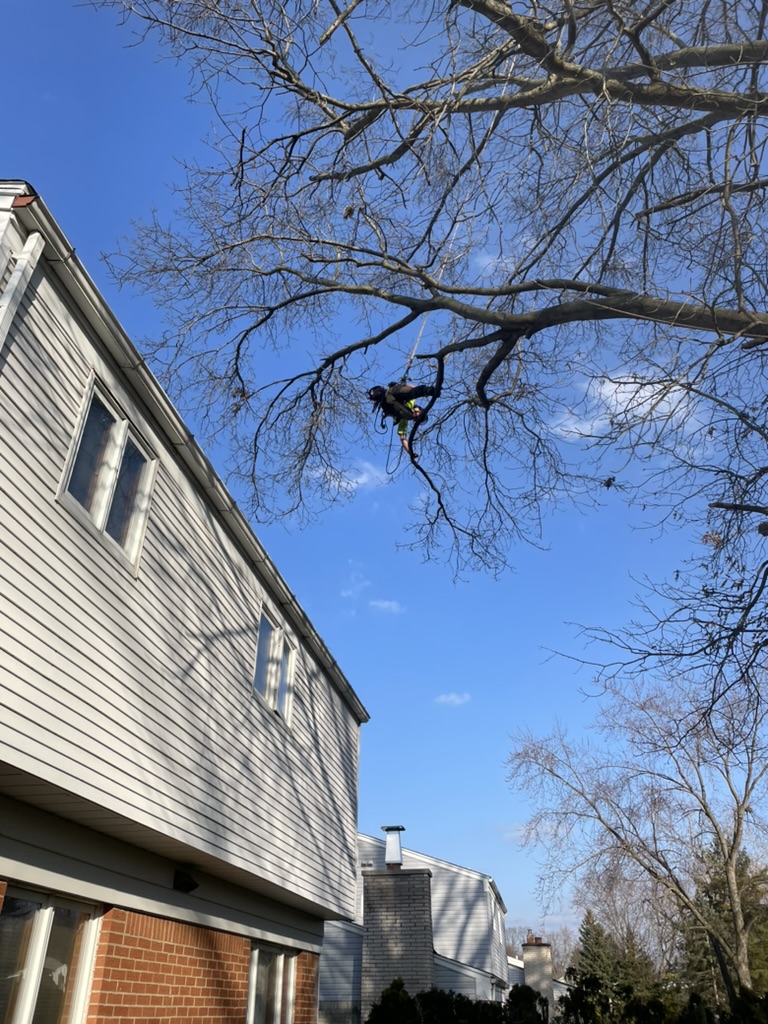
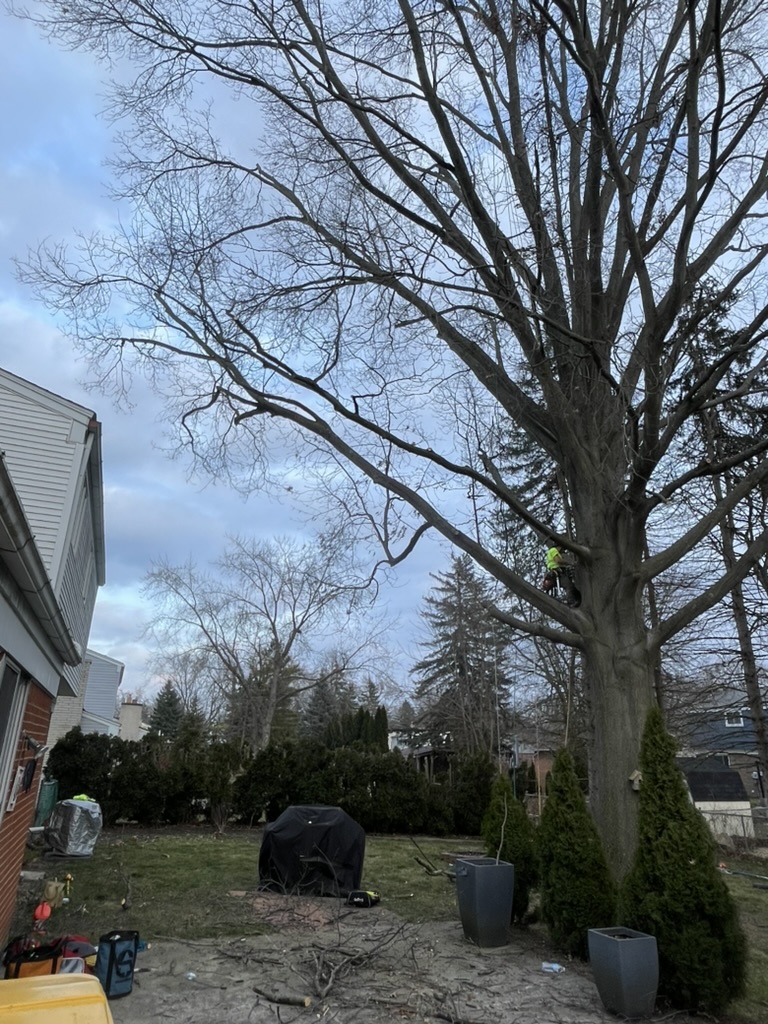
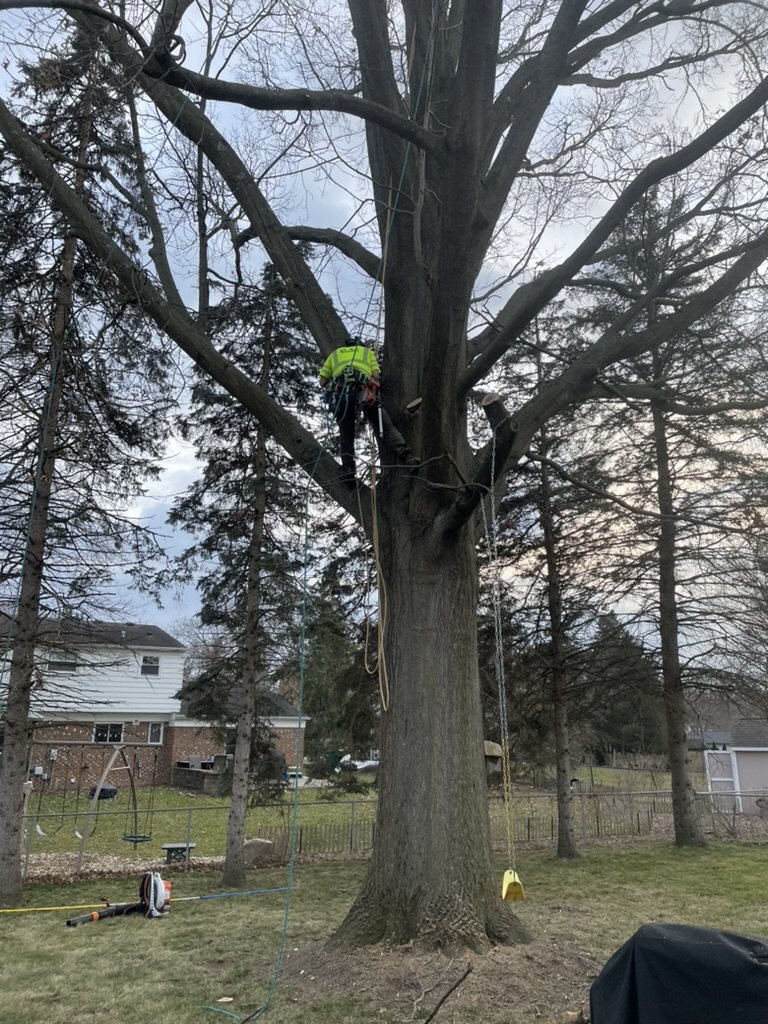
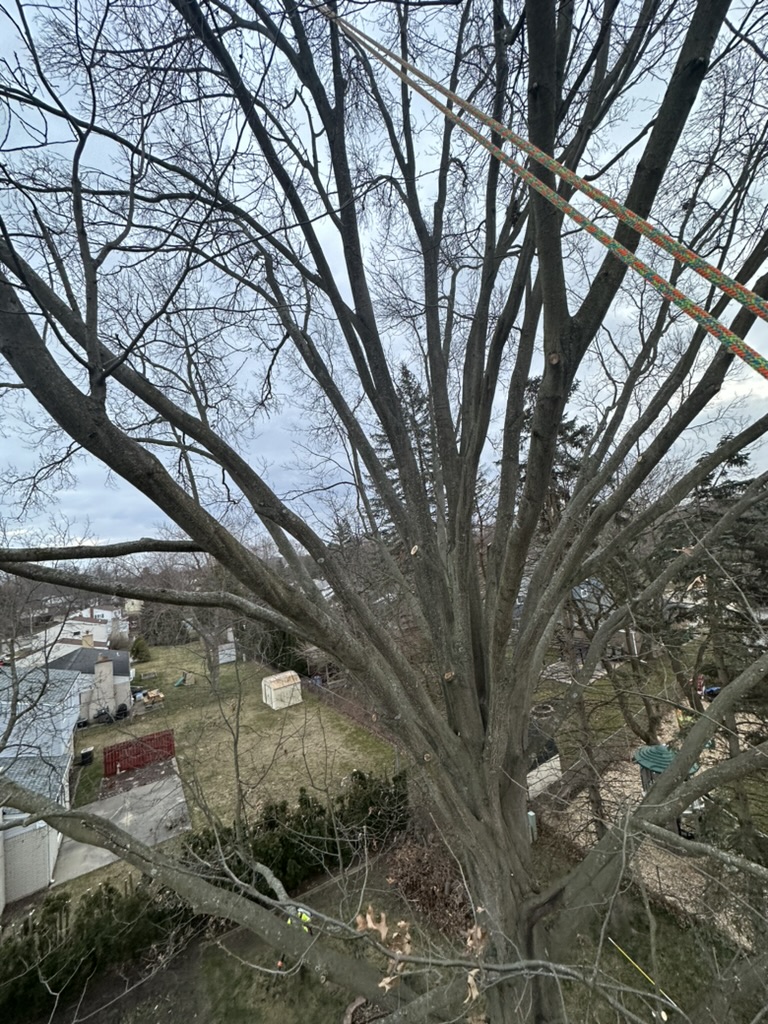
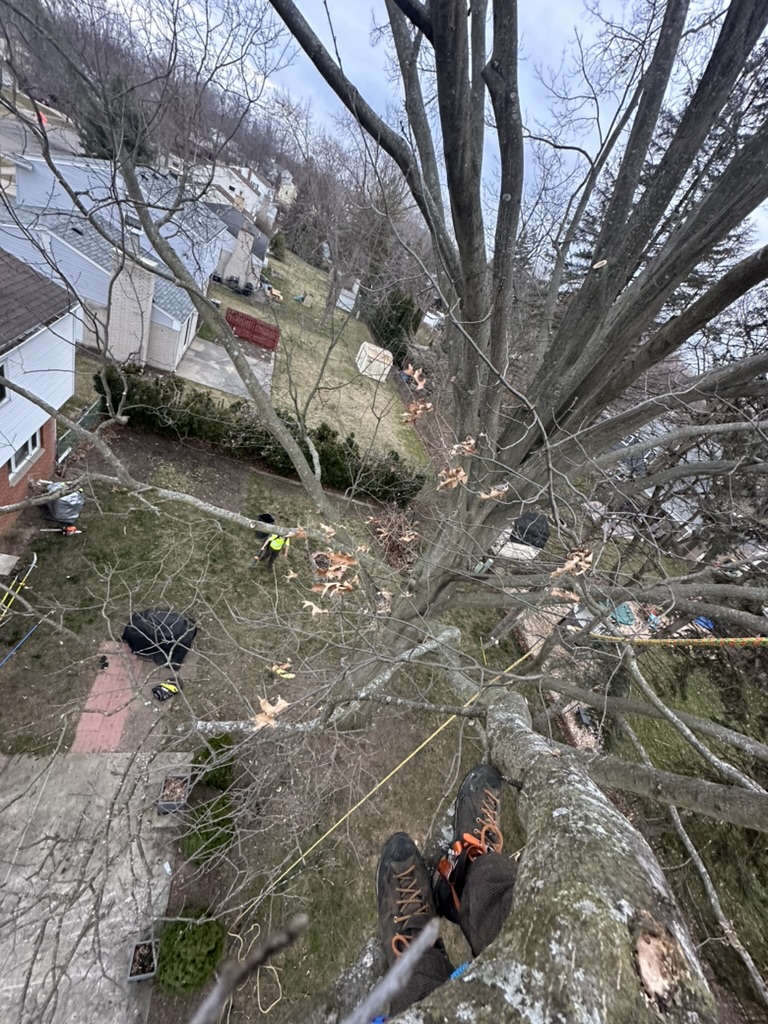
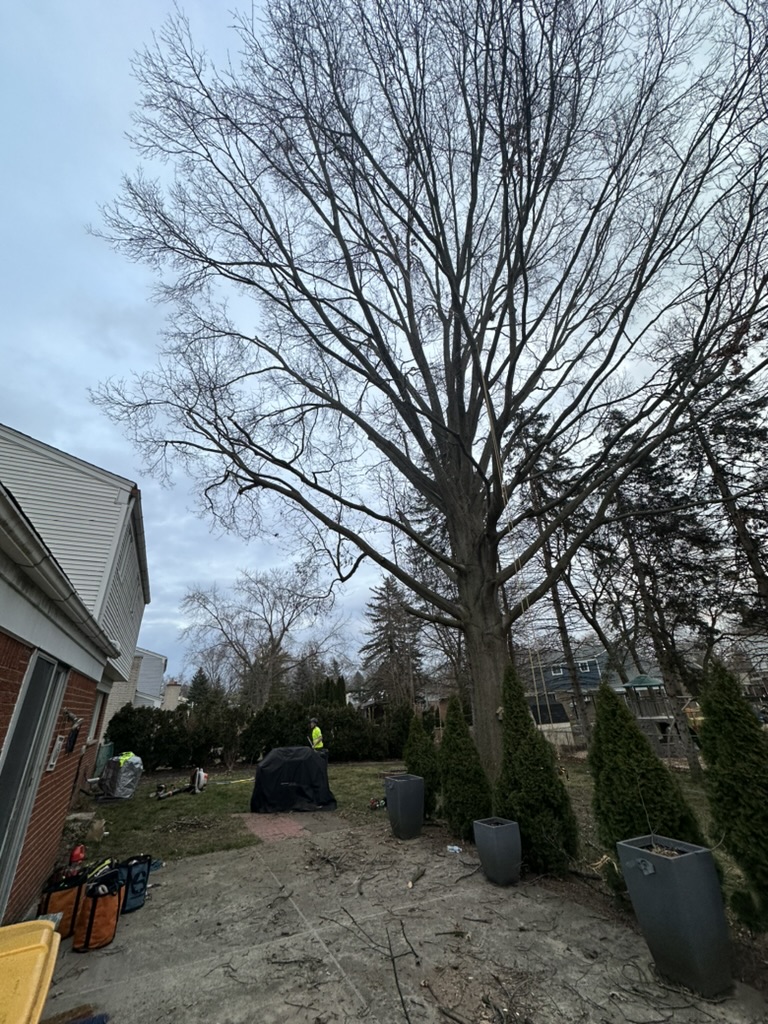
A massive, largely untouched oak in the Ann Arbor, Michigan area had years of deadwood, from small tips to large limbs. No lift could reach it, so our climber did all the work by hand without spikes, protecting the bark, with careful cuts that help the tree seal over.
Project Facts
- Location
- Ann Arbor, MI area
- Completed
- February 2024
- Tree
- Large oak
- Service
- Dead wooding
- Access
- No lift access, so the work was done by a climber without spikes
The Job
This massive, largely untouched oak in the Ann Arbor, Michigan area had years of deadwood built up in its canopy, from small tips to large, heavy limbs.
Why the cut matters
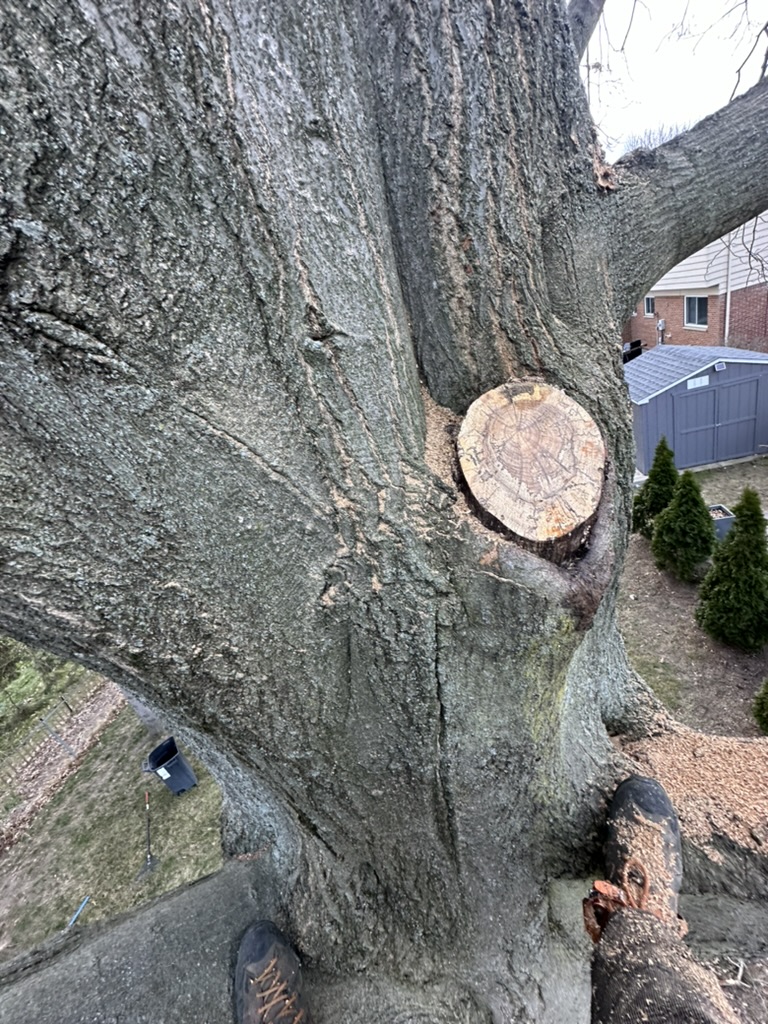
Dead wooding sounds simple, but where you cut makes a big difference. Leave too much stub and decay has a way in. Cut too close and you injure live wood. Each cut was placed to protect the branch collar, the part of the tree that does the healing, so the oak can seal over each wound.
Climbed, not spiked
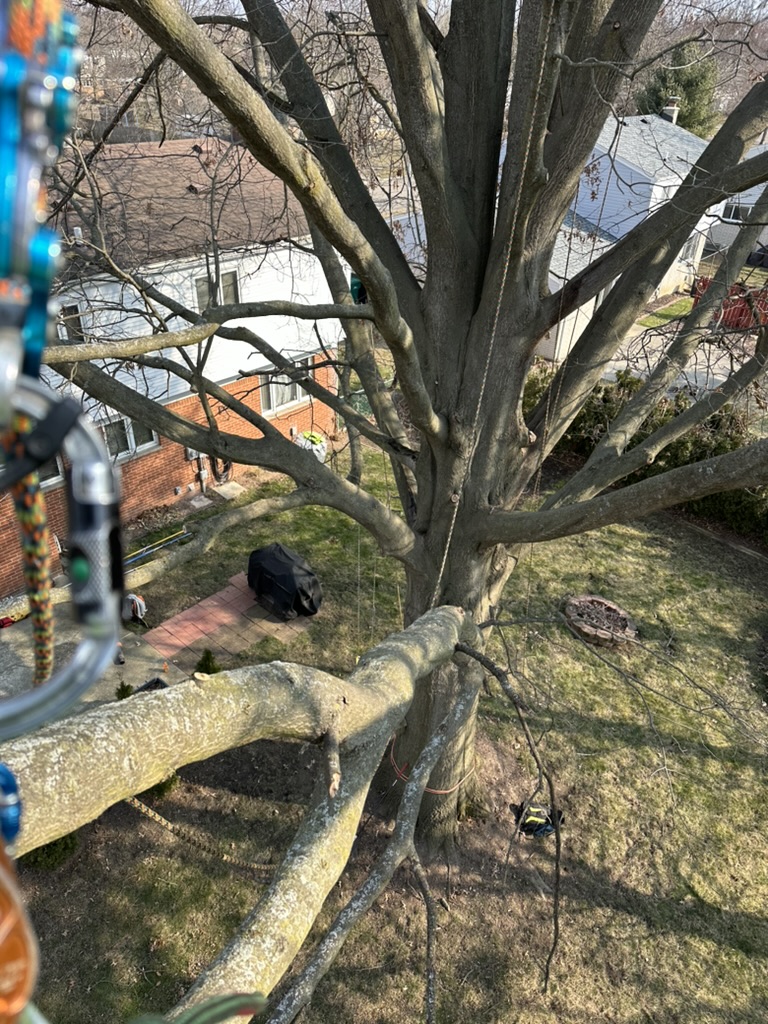
The tree was too big and too far from any access point for a lift, so every cut was made by a climber. We climbed without spikes to protect the bark of a tree this special.
The oak is now safer, healthier and better set up for the years ahead.
Project Photos
Questions About This Project
Why does the cut matter when removing dead branches?
Leaving too much stub gives decay a way in, and cutting into live wood makes the wound worse. The right cut protects the branch collar so the tree can seal over.
What is a spurless climb?
Spurless climbing means the climber does not use spikes, which protects the bark of a tree that is being kept.