Tree Care Tips
Small Cuts, Lasting Health: Protecting Brighton's Mature Oaks and Maples
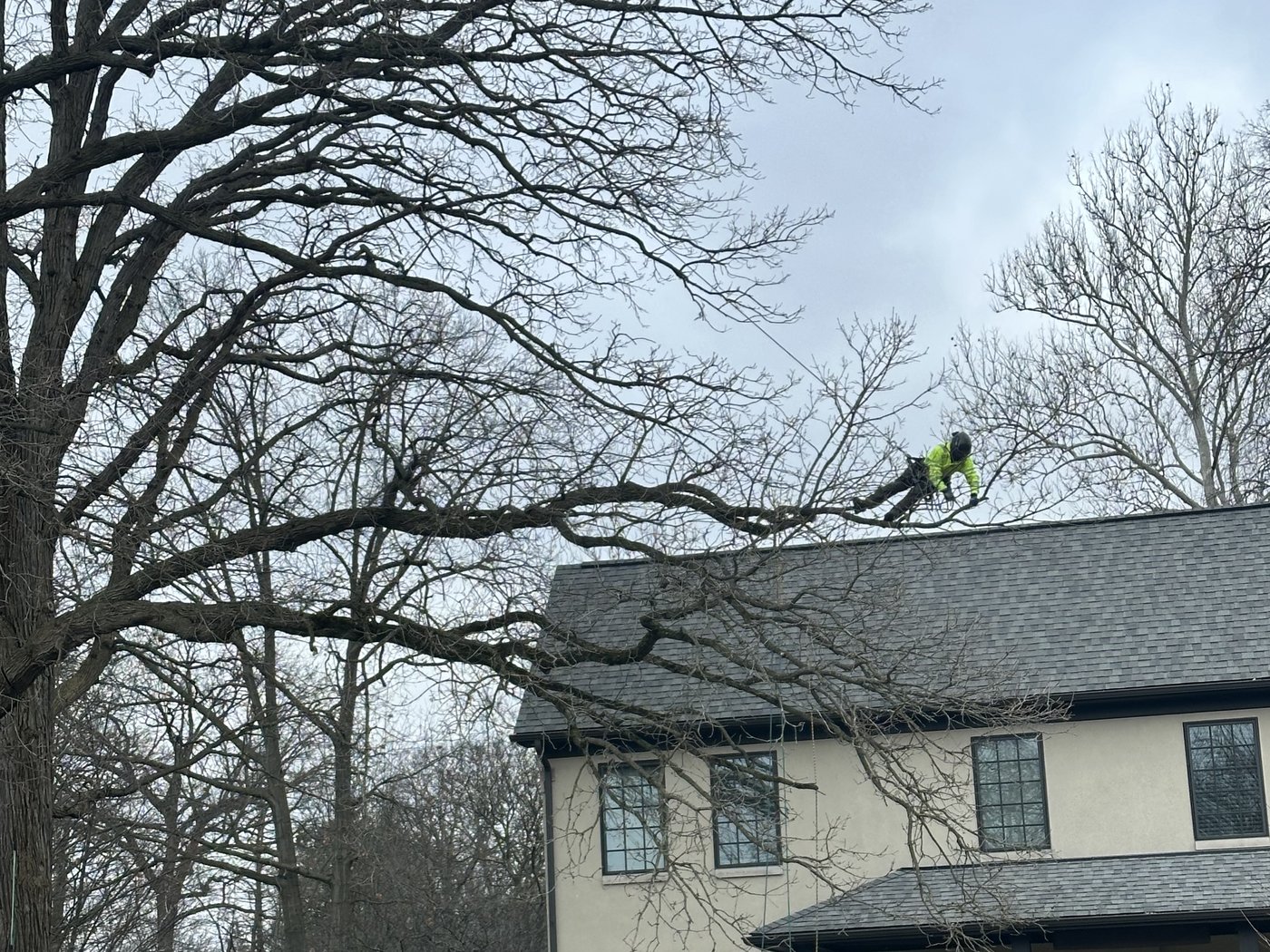
Drive through Brighton and you'll see what defines its neighborhoods: mature oaks and maples, some older than the homes beside them. Those trees are worth protecting, and pruning is one of the few things that affect them that's entirely in your control. Done well, it supports their structure and health. Done the wrong way, even with good intentions, it can quietly undermine both.
The frustrating part is that bad pruning rarely looks bad on the day it happens. The tree looks tidy and lighter. The damage shows up years later as thinning, dieback, decay and weak limbs, long after anyone connects it to the cuts that caused it.
What a cut means to a mature tree
Dr. Alex Shigo's research for the USDA Forest Service changed how arborists think about wounds. He showed that trees don't heal the way we do. They wall off injured wood and grow new wood around it. In his words, that works "most of the time, not all of the time," and the size, type and position of a wound all affect how well the tree can wall it off. Large wounds give decay a head start the tree may never fully contain. Dr. Ed Gilman's University of Florida guidance makes the same point from the other side: train trees while they're young so large branches don't have to be cut later.
That matters most on mature trees. Colorado State University Extension puts it plainly: mature trees are less tolerant of pruning than younger trees. Every large cut on an old oak is a wound the tree carries for the rest of its life.
Less is usually more
This is where good practice is clear. ANSI A300 asks that every pruning job have a clear objective, and the ISA Best Management Practices for pruning help arborists apply that standard in the field. The guiding idea is restraint: do only the work whose benefit clearly outweighs the harm of the wounds.
For a mature oak or maple, that means the goal isn't to reshape the tree. It's to deal with what genuinely needs attention, such as dead wood, damaged limbs, conflicts with the house or real structural concerns, while keeping as much healthy canopy as possible. Colorado State Extension also advises that when heavy pruning is needed, the work should be completed over a period of years rather than all at once.
What the standards rule out is just as important. ANSI A300, the American pruning standard, lists topping and lion's tailing as practices that are not acceptable because they injure trees. Iowa State and Kansas State Extension both document how they lead to weakly attached regrowth, decay and wind and ice damage.
One rule for oaks: timing
Brighton has a lot of oak, and oaks come with a rule that has nothing to do with technique. The Michigan DNR advises no pruning of oaks from April 15 to July 15, because beetles active at that time can carry oak wilt, a serious fungal disease, into fresh wounds. Momentum Tree Experts holds the ISA Oak Wilt Qualification, so we schedule oak work around this as a matter of course.
How to tell if past pruning was done well
You don't have to be an arborist to spot the warning signs:
- Branches stripped bare inside, with foliage only at the tips
- Main stems cut back to stubs
- Large fresh wounds on main limbs
- Thick clusters of upright sprouts growing from old cuts
- Oaks with fresh cuts between mid-April and mid-July
If you see these, an assessment can tell you what the tree needs now and how to correct course gradually.
Brighton trees deserve a plan, not a haircut
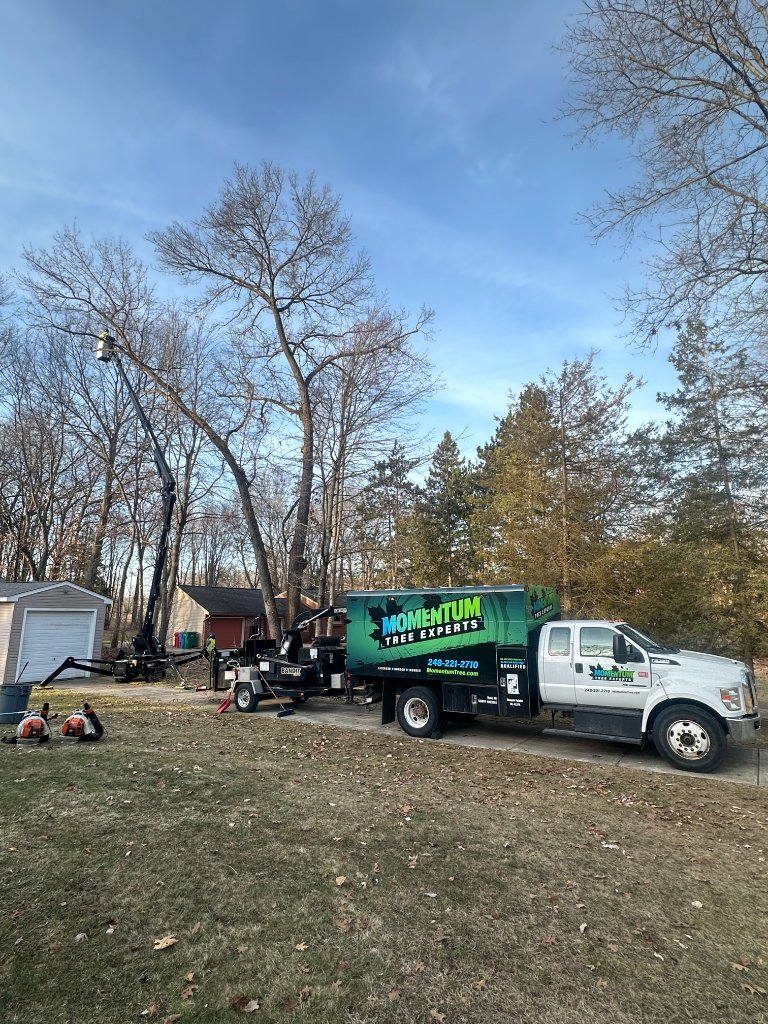
We serve Brighton and the surrounding area with pruning that follows ANSI A300 and the ISA Best Management Practices, led by an ISA Certified Arborist who also holds the ISA Prescriptive Pruning Qualification. We assess before we cut, explain every recommendation, and plan the work around what your tree can handle. Call 248-221-2710 or request a free estimate.
Tree Care in These Areas
Ready to address your tree care needs?
Free options available